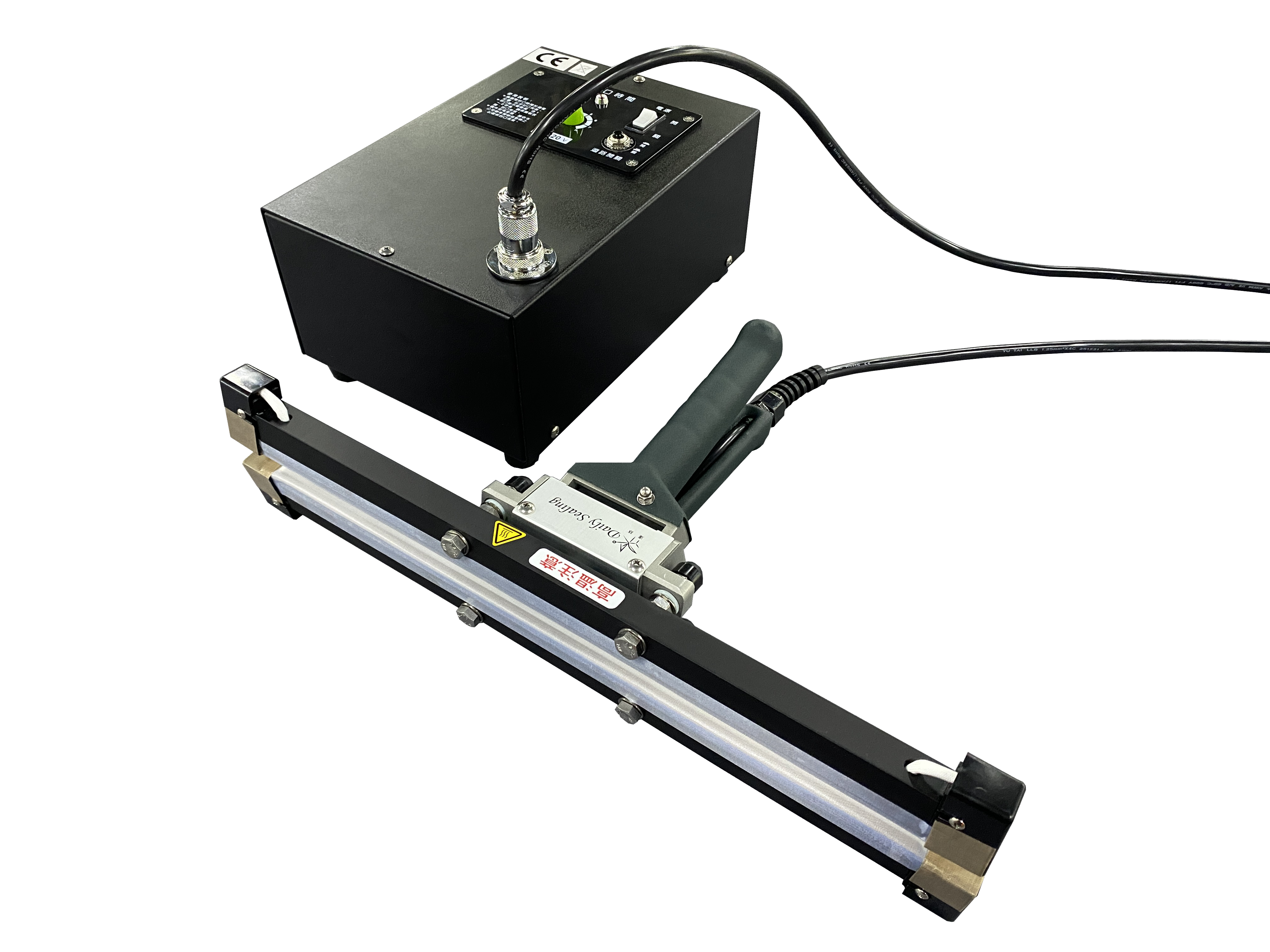
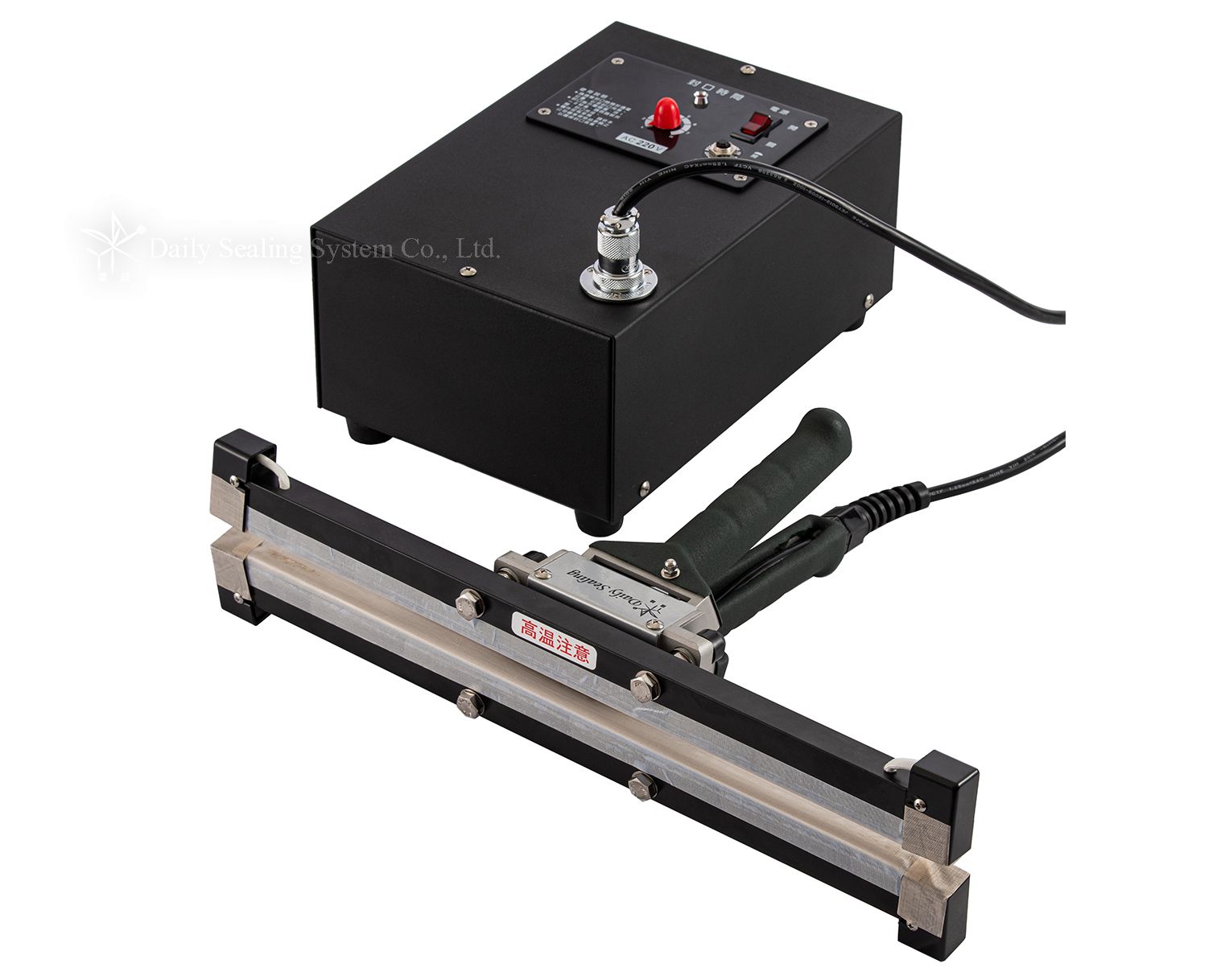
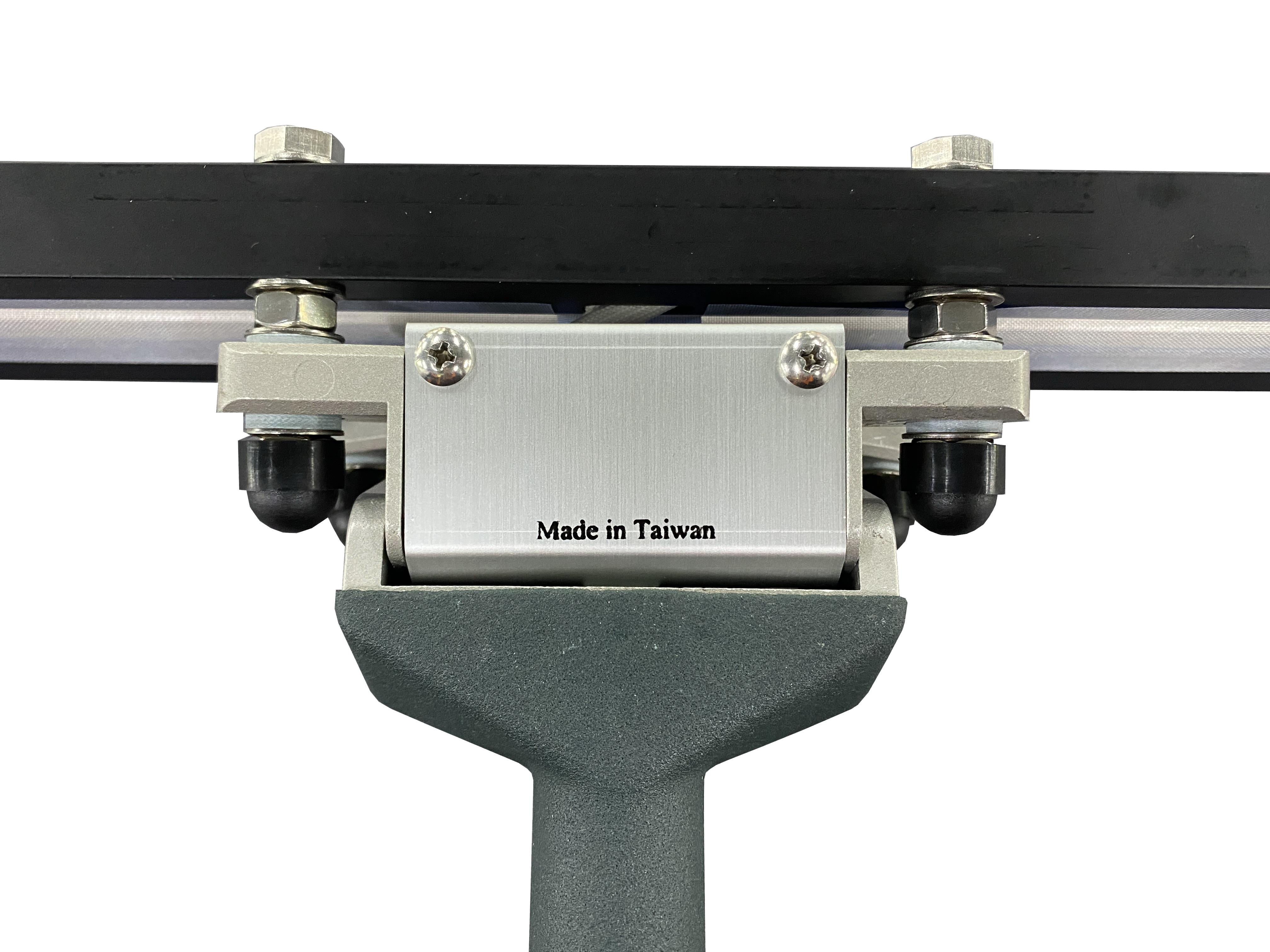
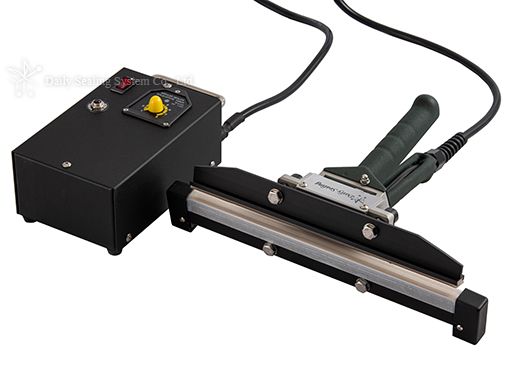
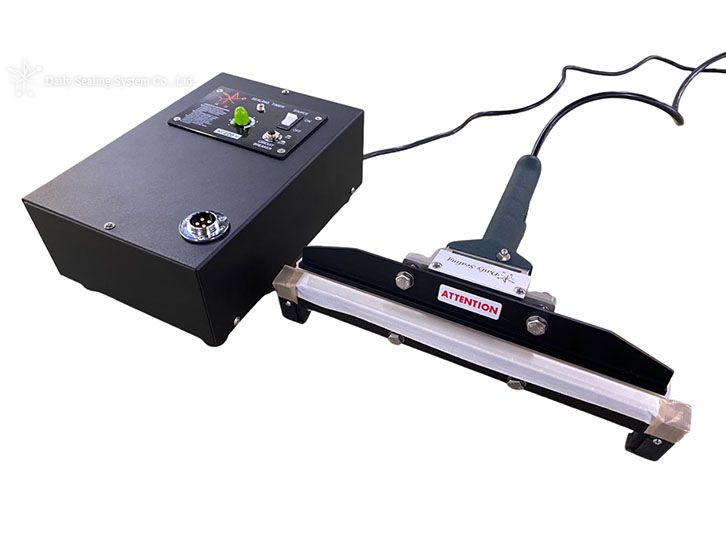
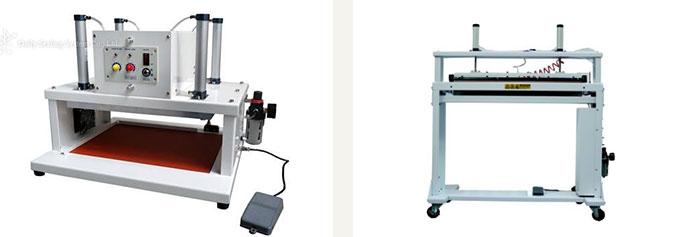
. Made in Taiwan. . Easy to operate: portable operation, strong mobility, convenient to seal large package. . Time control: as per package material and thickness to adjust the heating time. . Available for large and heavy package. . Suitable for PP, PE, PVC, NY and Aluminum material bags.
Sealing length: 30cm. Available for large and heavy package. Suitable for PP, PE, PVC, NY etc. material bags.
Why Choosing Dailysealing
Parts and material quality control
Heating elements are from Japan.
Motor, Transformers, PCB and vacuum bags are made in Taiwan.
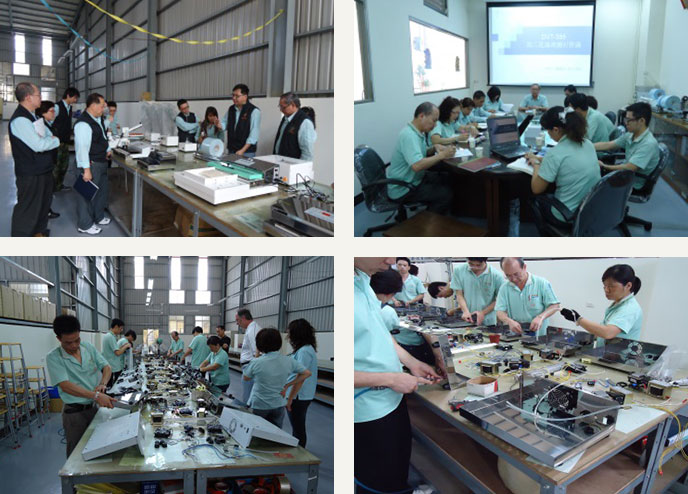
Strict quality control
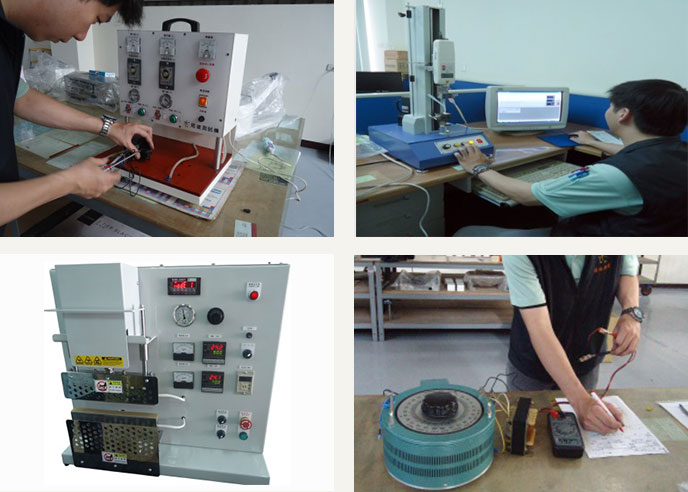
100% product inspection: The inspection is included functions and
appearance of sealing machines.
Tensile strength test to ensure the sealing line tensile strength
value reaches the customer standard.
Electric leakage test: Puncture and insulation test.
Our production and inspection are all based on ISO 9001.
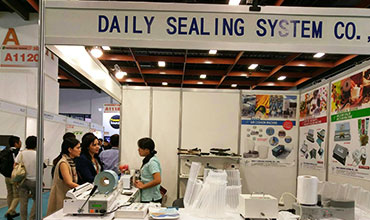
Professional packaging and sealing machine factory
Produce many kinds sealing machines and ODM/OEM products and provide
custom-made services.
More than 30 year experiences in packaging machines industry.
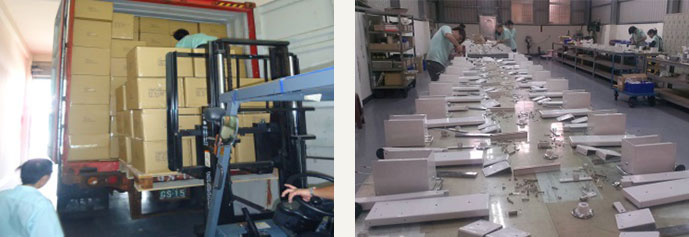
Sell sealing machines to America, Europe, Latin America and Asia.
85% products in stocks, so we can deliver the products quickly.
The production process is based on SOP to ensure the quality of
sealing machines consistently.
Complete range of specifications of sealing machines
Complete range of specifications of sealing machines.
Many kinds of sealing machines and consumptive materials in stocks,
so customers can do one-stop shopping here.
The customers include Biotechnology companies, Medical equipment
companies, Food industry, Electronics industry, Handmade soap
industry and other industry..
Custom-made sealing machine service
Custom-made sealing machine service
Designs of the special sealing machine for irregular shape sealing
line, such as U-shape sealing line and L-shape sealing line.
Different width of sealing line could be custom-made to meet
customer requirements.
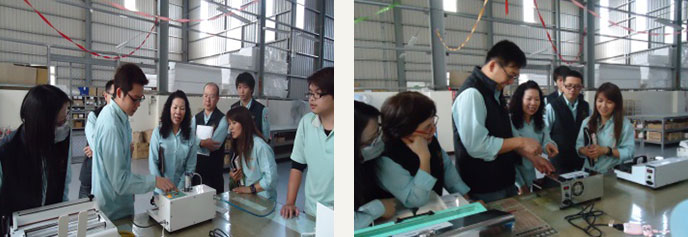
After-sales service of professional sealing machine
Provide the professional service for repair the broken sealing
machine immediately.
The sufficient supply of parts stock, so don’t worry about the parts
replace.
Some parts of sealing machine are used in common specifications, so
it is easy to get the parts for replace.
How to Check Heat Seal Integrity: Seal Quality & Leak Inspection Guide A pouch that looks closed is not necessarily properly sealed. A seal can appear complete while still containing wrinkles, unfused sections, contamination, pinholes, weak bonding or
small leakage paths. In some cases, the problem does not become visible until the package is handled, transported or stored for a period of time. For B2B packaging operations, checking seal quality should therefore go beyond asking whether the two sides of
the pouch are attached. Production and quality-control teams should evaluate seal-line continuity, seal appearance, post-cooling seal condition, leakage or vacuum loss, pouch and pre-made seal integrity, production consistency, and applicable customer or industry
quality requirements. The inspection method should match the packaging material, product and required level of quality assurance. Quick Answer: How Do You Check Whether a Heat Seal Is Good? A practical first-level seal inspection can follow these steps: Inspect
the seal line — it should be continuous and free from obvious wrinkles, burn-through, holes or unfused areas Check the pouch opening — oil, water, powder or product particles should not be trapped in the sealing area Allow the seal to cool — then perform an
appropriate preliminary seal check for easy peeling or recurring weak areas Check for leakage or vacuum loss — inspect the seal, pouch body and original side or bottom seals For production use, establish a QC procedure — do not rely on the appearance of one
sample as proof that the process is stable A visual or manual check is useful for preliminary inspection, but it does not replace formal seal-strength or package-integrity testing when such testing is required. 1. Start with a Visual Inspection of the Seal
Line Visual inspection is usually the fastest first step. A properly formed heat seal should generally appear continuous and consistent, without obvious interruptions or damage. Is the Seal Line Continuous? Check the full sealing length for gaps, unfused sections,
fixed-position defects or significant variation in appearance. If the same position repeatedly fails to seal, the issue may relate to the heating element, PTFE material, pressure pad or sealing-area alignment rather than only the process setting. Are There
Wrinkles? Wrinkles across the seal area can create small leakage channels. This is especially important when sealing gusseted pouches, multi-layer sections, uneven bag openings, or pouches that were not flattened before sealing. Is There Evidence of Excessive
Heat? Check for discoloration, severe shrinkage, material thinning, melt-through or burn marks. These conditions may indicate excessive heat input or a sealing condition that does not match the pouch structure. Is the Seal Area Contaminated? Oil, moisture,
powder, food particles or other product residue can interfere with seal formation. For products with oily, wet or powdery contents, maintaining a clean sealing area is especially important. Related guide: Heat Sealer Not Sealing Properly? 5 Common Causes and
How to Fix Them 2. Allow the Seal to Cool Before Performing a Preliminary Seal Check Heat-sealed material may still be soft immediately after the heating cycle. For this reason, seal quality should not always be judged the instant the pouch leaves the sealing
area. Depending on machine design, the process may include heating time, pressure or dwell time, cooling time, and continued pressure during cooling. After the seal has cooled appropriately, a preliminary manual check can help identify obvious weak bonding.
For example, if the seal opens under very light handling, repeatedly peels at the same position, or contains clearly unfused areas, the sealing condition should be reviewed. However, this type of manual check is only a shop-floor screening method. It should
not be presented as a standardized seal-strength test. For products subject to customer specifications, regulated packaging requirements or formal quality systems, use the required measurement or verification method. 3. How Do You Check a Vacuum Package for
Leakage? A vacuum package can appear normal immediately after sealing and later lose its vacuum. When this happens, inspect several possible leakage locations. Inspection AreaWhat to Check Heat seal line Wrinkles, contamination, unfused sections or interrupted
sealing Pouch body Pinholes, punctures, sharp-product damage or handling damage Original side / bottom seals Leakage from pre-made pouch seams Packaging material Whether the pouch structure and barrier properties are suitable for the application Seal area
Whether heat, pressure and time were sufficient for the material If the vacuum sealer cannot remove air from the beginning, the issue may involve pouch compatibility, air evacuation or the vacuum system rather than seal integrity. This is a different troubleshooting
issue from a package that initially seals correctly and later loses vacuum. Important: Package Expansion Does Not Always Mean Seal Leakage. If a vacuum package gradually expands after sealing, leakage is one possible cause, but it should not automatically
be assumed to be the only cause. Depending on the product and storage conditions, package appearance may also change because of factors such as product gas release or temperature changes. For this reason, investigate seal line → pouch body → original pouch
seams → packaging material → product condition before concluding that the sealing machine is defective. 4. Can You Leave a Package for a Period of Time to Check for Leaks? Yes, a defined observation period can be used as an internal screening method. For example,
a production team may keep vacuum-sealed samples and monitor whether they lose vacuum, rebound or expand, develop visible leakage, or show seal deterioration. However, the observation period should be defined by the company's product and QC requirements. There
is no universal observation time that automatically proves package integrity for every application. For example, "no vacuum loss after 24 hours" may be useful as an internal screening criterion for a particular company or product, but 24 hours is not a universal
industry standard for all vacuum packaging. 5. Formal Seal-Quality Verification Requires More Than Visual Inspection For production packaging, customer acceptance, food packaging, medical packaging or applications with defined quality requirements, visual
inspection alone may not be sufficient. Depending on the product and quality specification, a company may need to evaluate seal strength or peel strength, package integrity or leakage, vacuum retention, package condition after transport or handling, and other
test methods required by the customer, market or application. The appropriate method and acceptance criteria depend on pouch structure, packaging application, product risk, target market, customer specifications, and applicable internal or external quality
requirements. Important scope note: The visual inspection, preliminary manual seal check and observation methods described in this guide are intended for general industrial packaging screening and troubleshooting. They do not replace any formal packaging validation,
regulated test method or customer acceptance standard required for a specific product or industry. 6. Establish a Seal-Quality Sampling Record for Production Once a sealing process enters repeat production, "the machine is running normally" should not be the
only quality criterion. Seal consistency can change because of packaging-material batch variation, material supplier changes, temperature changes, production speed changes, machine wear, heating-element condition, operator handling, contamination, or process-setting
changes. A practical production QC record can include: Sealing machine model Pouch material structure Pouch thickness Pouch supplier or batch Sealing time Sealing temperature Conveyor speed, when applicable Seal width Visual inspection result Preliminary seal
check result Vacuum-loss observation, when applicable Defect samples Adjustment history These records help production teams trace changes when seal quality starts to decline. They also make repeat production more consistent because the process is documented
instead of relying only on operator memory. 7. What Should You Do When Seal Quality Fails Inspection? Once a seal-quality problem is identified, the next step should depend on the symptom. Problem FoundRecommended Direction Weak seal / easy peeling Check material,
sealing temperature, time and pressure Wrinkled or burnt seal Review heat input and pouch compatibility Uncertain sealing time Re-test and document the sealing-time setting Same location repeatedly fails Inspect heating element, PTFE material, pressure area
and alignment Vacuum package gradually loses vacuum Inspect seal line, pouch body and original pouch seams Problem continues after settings are corrected Inspect machine components or contact technical support For sealing-time adjustment, refer to: How to
Set Sealing Time for Impulse, Constant Heat and Continuous Band Sealers For material-specific temperature guidance: Heat Sealing Temperature Guide for Different Packaging Materials For troubleshooting: Heat Sealer Not Sealing Properly? 5 Common Causes and
How to Fix Them 8. B2B Seal-Quality Checklist: What Information Should You Prepare for Technical Support? When discussing a seal-quality problem with a sealing-machine manufacturer or packaging equipment supplier, providing complete application and process
information can help the technical team identify whether the issue is related to the packaging material, process settings or equipment condition. Sealing machine model Sealing method: impulse, constant heat, band or vacuum Pouch structure Pouch thickness Pouch
dimensions Required seal width Product being packaged Dry, oily, wet, powder or liquid condition Sealing temperature Sealing time or timer setting Conveyor speed, when applicable Current seal appearance Whether the seal opens easily Whether the package loses
vacuum Whether the defect always occurs in the same position Daily production volume Applicable customer or quality requirements For OEM / ODM or new packaging projects, this information can also help determine whether the existing sealing method and machine
configuration are suitable for the required material and production conditions. The following answers are based on Daily Sealing System's sealing-machine manufacturing, packaging-material application testing and after-sales technical support experience since
2010. Frequently Asked Questions Q1: How can I tell if a heat seal is properly sealed? Start with a visual inspection. The seal line should be continuous and free from obvious wrinkles, burn-through, contamination and unfused sections. After appropriate cooling,
perform a preliminary seal check and use any additional strength or integrity verification required for the packaging application. Q2: Is a seal good if the pouch looks completely closed? Not necessarily. A pouch can appear closed while still containing weak
bonding, wrinkles, contamination or small leakage paths. Seal appearance is only the first level of inspection. Q3: Is it normal if a heat seal opens easily after cooling? If the seal opens very easily after appropriate cooling, the material, sealing time,
temperature, pressure or equipment condition should be reviewed. Formal acceptance criteria should still follow the applicable product or customer quality requirement. Q4: Does a vacuum package that expands later always mean the seal is leaking? No. Leakage
from the heat seal, pouch body or original pouch seams is one possible cause, but product gas release or storage-temperature changes may also affect package appearance. Inspect both the package and the product condition before drawing a conclusion. Q5: If
a vacuum bag does not leak after 24 hours, is it automatically acceptable? No. A 24-hour observation can be used as an internal screening condition, but it is not a universal acceptance standard for all products or vacuum packaging applications. Q6: Does every
package need to be tested during production? Not necessarily. Whether a company uses 100% inspection or sampling depends on product risk, internal quality procedures, customer requirements and the production process. The inspection frequency and acceptance
criteria should be defined by the applicable quality system. Q7: What is the difference between seal inspection and seal testing? Seal inspection usually includes preliminary checks such as visual condition, continuity, contamination and obvious bonding defects.
Formal seal testing may involve defined strength, integrity or leakage methods with specified acceptance criteria. The required level depends on the packaging application. 📖 Further Reading → How to Set Sealing Time for Impulse, Constant Heat and Continuous
Band Sealers → Heat Sealing Temperature Guide for Different Packaging Materials → Heat Sealer Not Sealing Properly? 5 Common Causes and How to Fix Them → How to Choose the Right Sealing Length and Sealing Width → Sealing Machine Maintenance: 7 Ways to Extend
Service Life About This Article This article was prepared by the Daily Sealing System technical team for purchasing teams, packaging engineers, production managers, contract packers and industrial packaging users. Daily Sealing System Co., Ltd. is a Taiwan-based
sealing machine manufacturer with an in-house production facility. The company provides impulse sealers, constant heat sealers, foot sealers, continuous band sealers, vacuum sealers, medical pouch sealers and customized sealing equipment, together with OEM
/ ODM support and after-sales technical service. This guide is based on Daily Sealing System's sealing-machine manufacturing, packaging-material application testing and after-sales technical support experience since 2010. The inspection methods described here
are intended as general industrial packaging guidance. Where a product is subject to formal quality, regulatory or customer requirements, the applicable test method and acceptance criteria should take priority. Need Help Evaluating Seal Quality for Your Packaging
Application? Send us your machine model, pouch material structure, pouch thickness, bag dimensions, product type, sealing temperature, sealing time, current seal appearance, photos of the defective seal, production volume and applicable quality requirements.
Our technical team can help you identify whether the issue is more likely related to the packaging material, process settings, machine configuration or equipment condition. View Sealing Machines Contact Our Technical Team // //
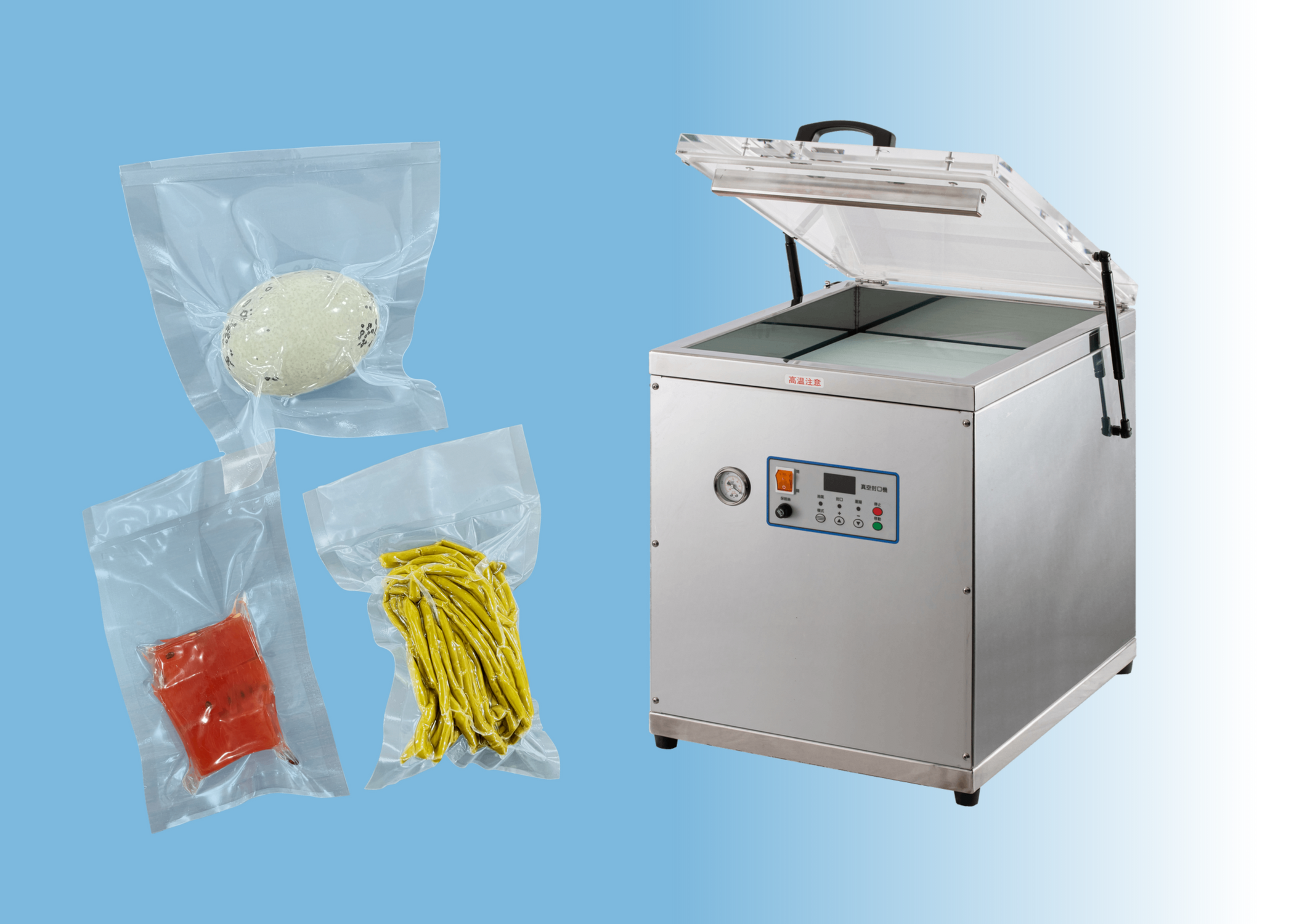
In recent years, vacuum packaging has become very popular. Vacuum packaging keeps damp proof, extended shelf life, and reduced storage space. There are various types of vacuum sealing machines available on the market. How to find a suitable vacuum sealer
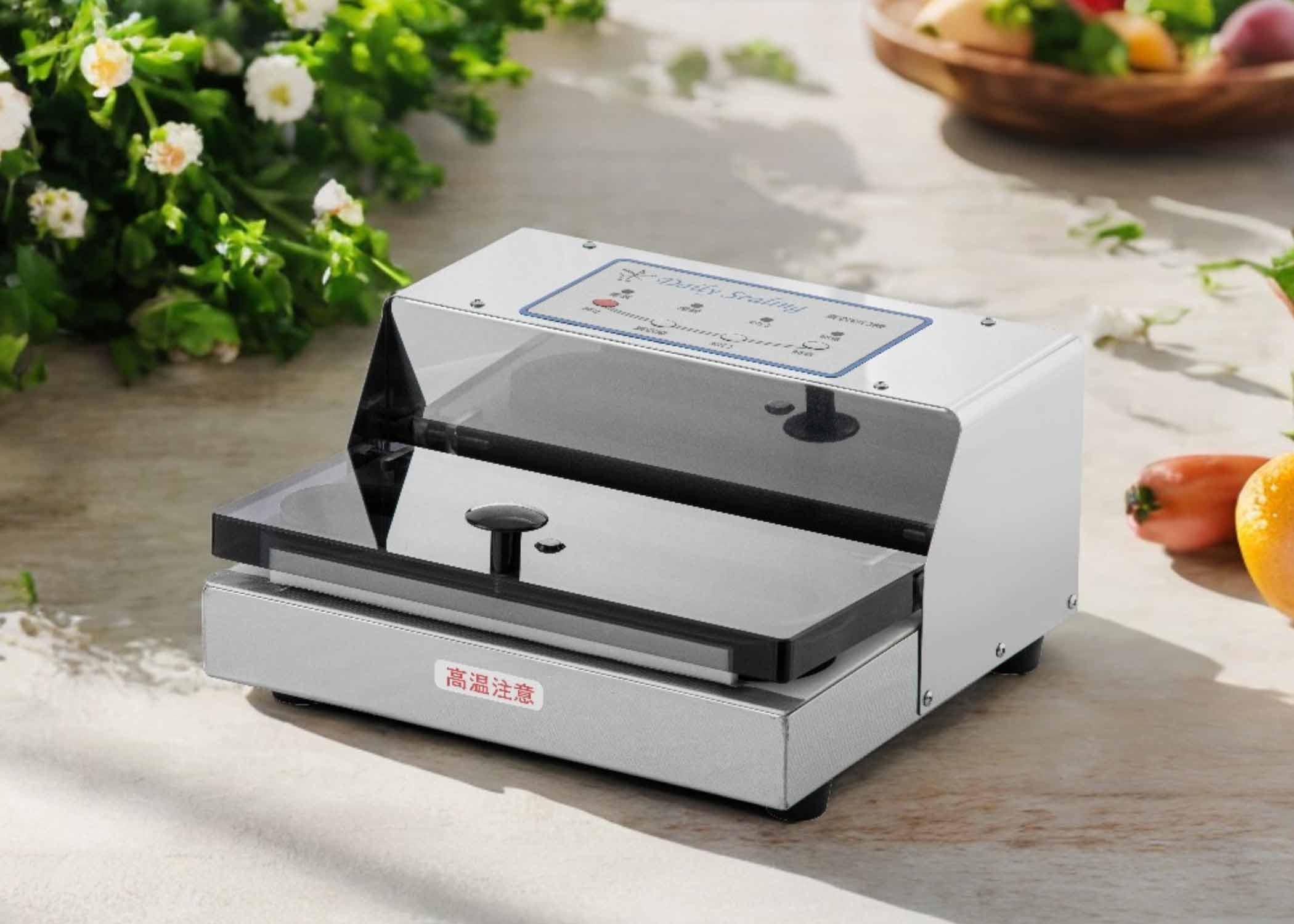
for your product? The following are specially divided into three categories for the vacuum sealers sold on the market (Chamber Vacuum Sealer, Non-nozzle Vacuum Sealer, and Nozzle Vacuum Sealer) to introduce advantages and disadvantages. There are other places
to pay attention to when buying, hope to help everyone buy a suitable vacuum sealer, and enhance the quality of product. ※Chamber Vacuum Sealer This is the most familiar and most commonly seen vacuum sealer. As the name suggests, it looks like a box. Therefore,
large size and heavy weight are the biggest drawbacks of this vacuum sealer, but the vacuum degree is the best compared to the other two types of vacuum sealers. We also call this vacuum sealer an internal vacuum sealer. Because the items which you want to
vacuum have to be put into the vacuum chamber in the vacuum sealer, and can be vacuum packaged. Since the vacuum item needs to be put into the vacuum chamber, the product will be limited by the size of the vacuum chamber. If the product is larger, the vacuum
chamber must be larger. As the size of the vacuum sealer increases, its price also tends to increase. Therefore, when purchasing, it needs to consider whether the internal size of the vacuum chamber is suitable for your needs. The chamber vacuum sealer is
further divided into oil-less and oil-type vacuum sealer due to the different types of vacuum pumps installed inside the machine. The vacuum capability of oil-less type vacuum sealers is slightly lower than that of oil-type vacuum sealers. Oil-less type vacuum
sealer is suitable for dry products, such as tea, dried fruit, rice, and electronic parts. The price of this vacuum sealer is lower than that of the oil-type vacuum sealer, but the vacuum capability is sufficient for dry vacuum packaging. Oil-type vacuum sealer
is suitable for both dry and moist products. If there is liquid in the product, it's recommended to choose an oil-type vacuum sealer. Suitable for packing products: meat, seafood, liquid, and powder. The Oil-type vacuum pumps installed in the Oil-type vacuum
sealers on the market have different vacuum capabilities. If you need vacuum packaging for seafood or meat products, it's recommended to choose an Oil-type vacuum sealer with better vacuum capability. If the product itself is soft, even after being vacuumed,
it will still be soft to the touch, and will not be as hard as dry products after being vacuumed. The price of Oil-type vacuum sealers is higher than that of oil-less-type vacuum sealers, and the higher the required vacuum capability, the higher the price.
Also, it should be noted, Oil-type vacuum pump needs to add vacuum oil, so when using an Oil-type vacuum sealer, it's a must to regularly check the amount of vacuum oil and the clarity of the vacuum oil. If the oil level is below the standard, vacuum oil needs
to be added; if the vacuum oil is cloudy, the old oil must be drained before adding new vacuum oil. The more often the vacuum sealer is used; the frequency of adding and draining oil is also higher. When the vacuum degree drops, you can first check whether
it is due to the vacuum oil. Some oil-type vacuum sealers will also be equipped with oil mist catchers, to capture the oil mist generated during the operation of the oil-type vacuum pump. Smoke generation was found during the operation of the vacuum sealer,
oil mist is likely generated when the oil vacuum pump is running, which is a normal phenomenon. The installation of an oil mist catcher is to reduce the situation of oil mist drifting. The oil mist catcher is a consumable, and the frequency of use will affect
its life. When purchasing a vacuum sealer, factors to consider include price, the suitable types of vacuum bags, vacuum efficiency, the size and type of products to be sealed, and the operating method. No matter what kind of product you want to vacuum, it's
recommended to bring the product to the site for testing before purchasing, test the vacuum effect and understand how to operate it, this will allow you to choose the most suitable vacuum sealer for your needs.
How a Vacuum Sealer Works Many friends often ask: "Do I have to use a vacuum bag when using a vacuum sealer?" "Do I have to use special bags when using a vacuum sealer? Can I use flat vacuum bags with non-nozzle type vacuum sealers? Can I use all type
vacuum bags with chamber vacuum sealers?" You can find the answer after reading the following instructions. 1. Do we have to use vacuum bags for vacuuming? A: If you only want to remove air, any material can be used. But if you want to maintain the vacuum
state for a long time, you must use vacuum bags which are PA (Nylon) material or aluminum foil bags with high airtightness. 2.Does "vacuum" really mean making the bag completely free of gas inside? A: Actually not, the main principle is to reduce the air
inside the bag to a level where microorganisms cannot survive, reducing oxidation or product spoilage, keeping items less susceptible to rusting, and maintaining the freshness and shelf life of food inside the bag. 3.Differences in principles between Non-nozzle
vacuum sealer and chamber vacuum sealer. A: There are two different principles of air extraction, which also lead to different advantages and disadvantages. (1) Non-nozzle vacuum sealer: Directly extract the air from the bag, and then use heating to melt and
seal the plastic bag. Therefore, if you want to package fluids or powders, Non-nozzle vacuum sealers are likely to extract the contents you want to package, or extract contents that should contain moisture. Sometimes it may even cause internal parts to get
wet and be damaged. Most of the vacuum bags seen on the market have patterns on them, which is because most vacuum sealing machines are direct air suction type. When sealing wet items with this type of vacuum packaging machine, it is necessary to form channels
for smooth air. These channels are the patterns or folds on the vacuum bags or aluminum foil bags commonly seen in the market. When the air in the bag is reduced, aerobic bacteria cannot survive, so the items can be preserved for a longer period of time. Therefore,
whether it is a grid pattern, diamond pattern, or the vacuum channel sealer bags made by our company, they are all designed to facilitate air flow. Therefore, we would recommend using non-nozzle vacuum sealers for items with less water content and larger particles
inside. (2) Chamber vacuum sealer: When the lid is closed, the motor begins to perform the vacuuming action. At this time, the air inside the vacuum chamber and inside the vacuum bag will be affected by the motor and flow, so the pressure inside the vacuum
chamber will gradually become negative pressure. At this time, we may observe a phenomenon where the vacuum bag we placed inside is expanded. This is because the speed at which the air is removed from the vacuum bag cannot be as fast as that in the vacuum
chamber, which causes the pressure inside the bag to be greater than other parts of the vacuum chamber in a short time. This phenomenon will also cause the air inside the bag to accelerate and leave the bag at the moment the solenoid valve operates, and at
the same time, the heating plate will heat and seal the bag. Since it does not directly vacuum the air out of the bag, there is no need to worry about the moisture inside the bag being drawn out. For items with liquid or powder content, we would recommend
using a chamber vacuum sealer. Because the air inside the vacuum chamber is vacuumed out, the bag does not need an additional air extraction duct, so it can be used without embossed vacuum bags. 表單的頂端 表單的底部表單的頂端
We use cookies to provide a better experience. By proceeding, you agree to our PRIVACY POLICY, including the use of cookies and other tracking technologies.ACCEPT
.jpg)
.png)








.jpg)