.jpg)
.jpg)
.jpg)
.jpg)
Products
-
Vacuum Sealer
(4).png) Vacuum Sealer※ Vacuum sealer application: - For food : Keep food fresh. - For other articles : Moisture-proof, anti-mildew, dust-proof, antirust. For example: electronic parts. - Volume reduction : fluffy articles such as bed quilt can be reduced the volume and then easy to ship or storage.
Vacuum Sealer※ Vacuum sealer application: - For food : Keep food fresh. - For other articles : Moisture-proof, anti-mildew, dust-proof, antirust. For example: electronic parts. - Volume reduction : fluffy articles such as bed quilt can be reduced the volume and then easy to ship or storage. -
Medical Pouch Sealer
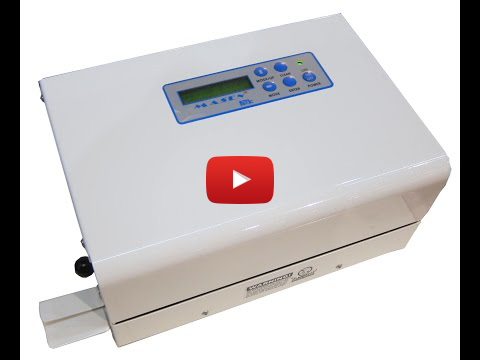
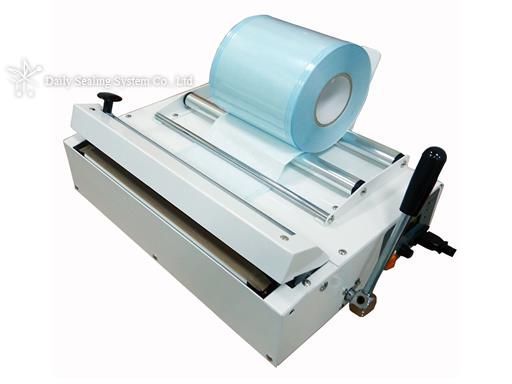 Medical Pouch SealerMedical pouch impulse sealer with cutter is suitable medical roller bag. Users can cut the roll bag and seal the bags. Medical pouch band sealer is suitable for the large quantity package.
 -
Hand Type Sealer
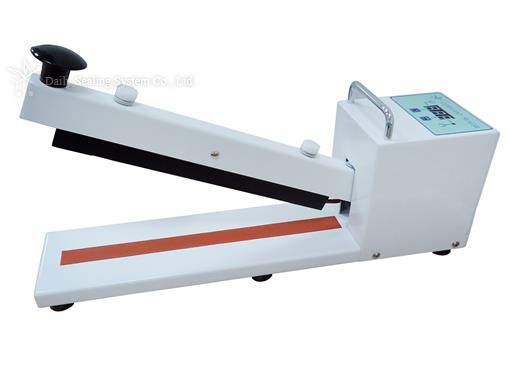 Hand Type SealerHand type sealer is the easiest sealer for users. Hand type sealer is small size that can save space. Portable sealer is suitable for large and heavy package.
 -
Foot Sealing Machine
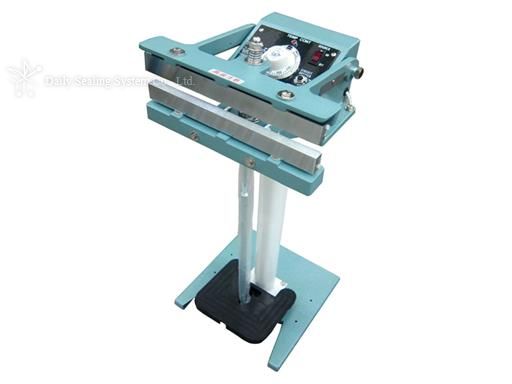 Foot Sealing MachineFoot sealing machine (Step sealer machine) is operated by foot. According to material and thickness of packaging bags, there are two kinds of Foot sealing machine (Step sealer machine): Impulse Foot sealing machine and constant heat Foot sealing machine.
 -
Semi-automatic Sealing Machine
(10)(1).jpg) Semi-automatic Sealing MachineThree kinds of semi-auto sealing machine: Electric magnet, Pneumatic and Motor control.
Semi-automatic Sealing MachineThree kinds of semi-auto sealing machine: Electric magnet, Pneumatic and Motor control. -
Rotary Sealer
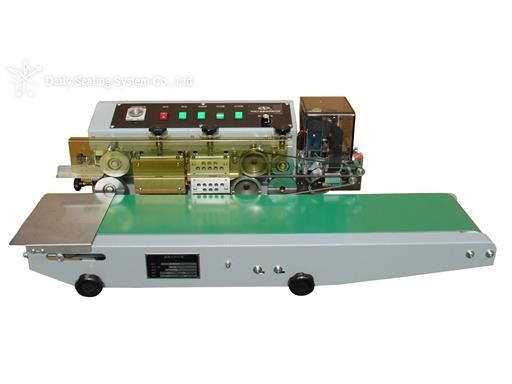 Rotary SealerThe rotary sealer is suitable for a large quantity of packages, saving time and effort. In addition to the general sealing function, there are also some models with vacuum and nitrogen filling functions.
 -
Vacuum Sealer Bag
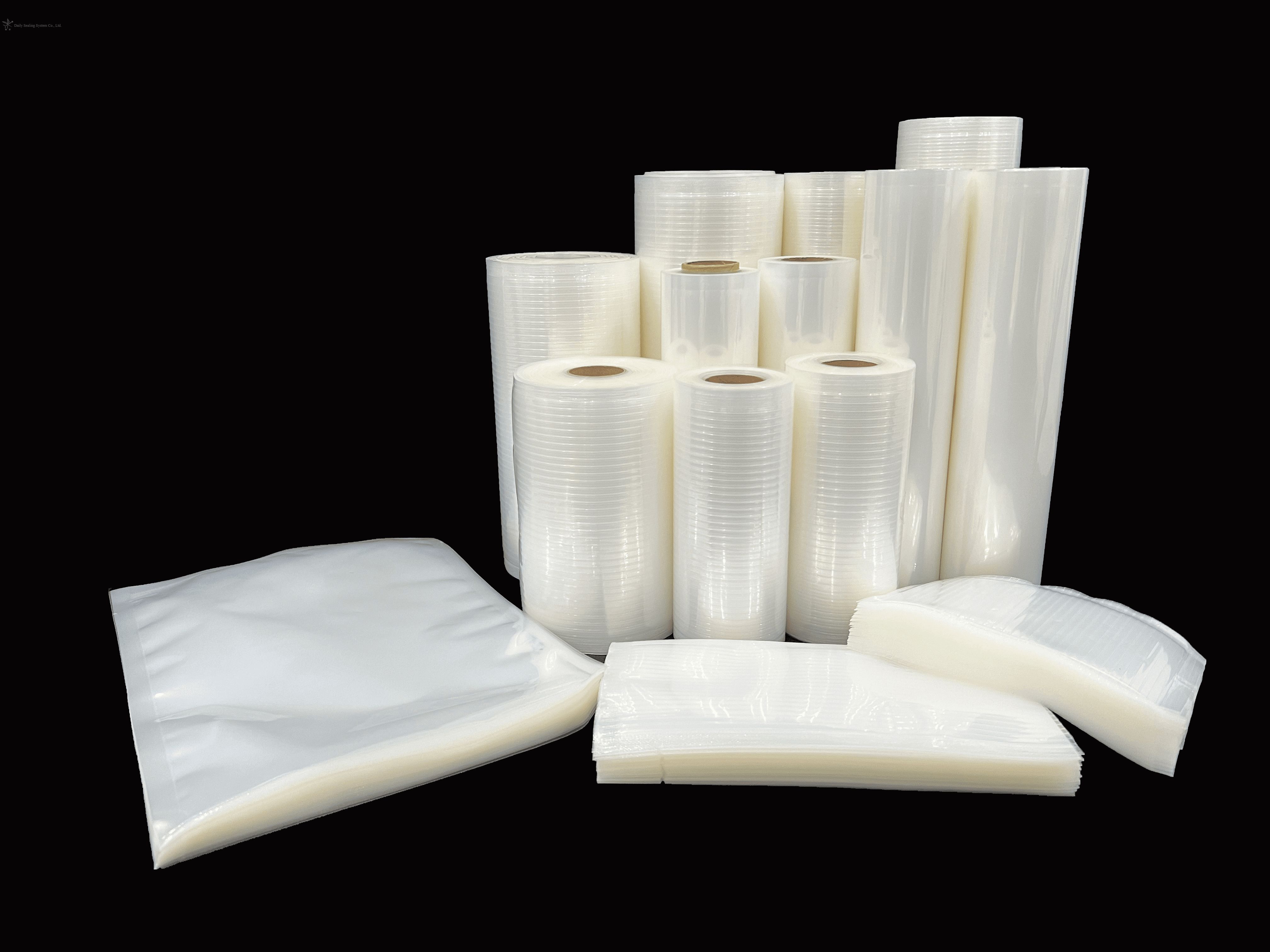 Vacuum Sealer BagVacuum package have to use the vacuum sealer bags, and it can keep the vacuum effect. Daily’s vacuum sealer bags are made in Taiwan, and have SGS approval, pass BPA FREE test, FDA and EU standards.
 -
Custom-made sealing machine
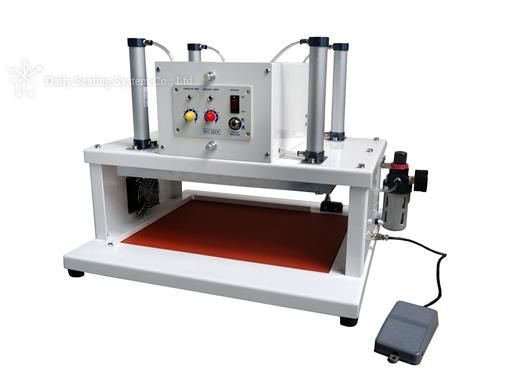 Custom-made sealing machineDesign the custom-made sealing machine in accordance with customer's demands.
 -
Other
.jpg) OtherOther different kinds machines and products.
OtherOther different kinds machines and products.
Videos
News & Events
-
202610/14Custom Printed Vacuum Bags for Bulk Orders: Materials, Sizes, Printing & OEM Buying GuideCustom Printed Vacuum Bags for Bulk Orders: Materials, Sizes, Printing & OEM Buying Guide Ordering custom printed vacuum bags in bulk is very different from buying a few sample pouches. For importers, distributors, private-label brands, food processors and contract packers, a single specification error can be repeated across thousands of bags — or an entire container. The bag has to fit your vacuum machine, protect the product, carry the right print for the destination market, and ship in a carton and pallet configuration that works commercially. This guide explains what bulk buyers should confirm before requesting a quotation, how to specify bag type, material, size, thickness and printing, why MOQ is only one of several numbers to compare, and how sample approval leads to bulk production and FCL or LCL shipment. Quick Answer: What Should a Bulk Buyer Confirm Before Ordering Custom Vacuum Bags? Before requesting a quotation, buyers should confirm the product being packed, vacuum machine type, bag structure, thickness, size, printing requirements, annual or order volume, destination market and required documentation. Product being packed: frozen, chilled or dry; bone-in or sharp edges; liquid or marinade content Vacuum machine type: nozzle-type, chamber or external (non-nozzle) Bag type and structure: smooth or embossed (channel); material layers Thickness: in micron or mil, and what the figure refers to Bag size: width, length, headspace and sealing allowance Printing requirements: artwork, colors, print area, barcode or date-coding area Order volume: quantity per size, per design and per year Destination market and documents: labeling and documentation requirements Do not evaluate the bag independently from the vacuum sealing system. A bag that looks right on paper can still fail on your machine. 1. Start with the Product and the Machine, Not the Artwork Printing is the most visible part of a custom vacuum bag, but it is rarely the part that decides whether the order succeeds. Experienced buyers settle the functional specification first and send artwork afterwards. Two questions come before everything else: What is being packed? Product form, weight, sharp edges or bones, moisture or liquid content, and whether it will be refrigerated, frozen or heat-treated all influence the bag structure and thickness you need. Which vacuum machine will seal it? The machine's air-evacuation method determines which bag type can be used. This is the first compatibility check in any bulk order. 2. Smooth vs. Embossed Vacuum Bags: Which One Fits Your Machine? For international buyers, this is the most important first check. Vacuum bags are commonly supplied as smooth (flat) pouches or embossed (channel) bags, and the two are not interchangeable on every machine. FeatureSmooth (flat) vacuum pouchesEmbossed (channel) vacuum bags How air is removed The machine design removes the air — for example through a nozzle, or by placing the pouch in a vacuum chamber Embossed channels on the film create air paths, so an external machine can draw air out through the bag opening Commonly used with Nozzle-type and chamber vacuum sealers External (non-nozzle) vacuum sealers Buyer should confirm Pouch width against sealing length or chamber size; sealing conditions for the bag structure Bag opening position and effective sealing length in the machine manual; channel pattern suits the machine These pairings are common patterns, not guarantees. Machine designs vary, so confirm the bag type against the specification of your exact machine — and test before bulk production. Explore the bag ranges: Channel Vacuum Bags and Vacuum Sealer Bags (smooth). Machine types: nozzle type, non-nozzle type and chamber vacuum sealers. 3. How to Select Material Structure for Commercial Vacuum Packaging Commercial vacuum bags are usually multilayer films. PA (nylon)/PE laminates are one common structure, but do not assume that every bag with the same material name performs the same way. Barrier properties, puncture resistance and suitability for refrigerated or frozen use depend on the exact layers, resin grades and thickness — and should be confirmed from the supplier's specification. What to specifyWhy it matters Material structure (for example PA/PE or other multilayer) Affects barrier performance, flexibility and heat-seal behavior Heat-seal layer Determines sealing conditions and whether the bag suits your sealer Barrier requirement Depends on product sensitivity to oxygen and moisture and your target storage conditions Puncture resistance Important for bone-in products, shellfish, hardware or other sharp items Temperature application Refrigerated, frozen or heat-treated use should be confirmed against the actual bag specification Food-contact documentation Request the documents that apply to the exact bag and the destination market 4. How Should Importers Specify Bag Size and Thickness? Bag size is not simply product size. Size must also account for air evacuation, the sealing area and the machine's limits. Supply the following so the supplier can quote the right bag the first time: Bag width and length Inner dimensions, stated clearly as internal or external. Product dimensions Length, width and height of the packed product, including the thickest point. Headspace Enough open space above the product for air evacuation and a clean seal area. Sealing allowance The opening must not exceed the sealer's effective sealing length. Thickness In micron or mil, and whether it is total film thickness. Tolerance Agree acceptable dimensional and thickness tolerance in advance. Reading thickness: suppliers may quote micron (µm) or mil. One mil equals 25.4 µm, so 3 mil is about 76 µm and 4 mil is about 102 µm. Always confirm whether the number refers to total thickness or to a single layer, so quotes from different suppliers can be compared fairly. Bag format also matters. Daily Sealing supplies smooth pre-made vacuum sealer bags for nozzle-type and chamber vacuum sealers, while vacuum roll bags are channel-type bags designed for non-nozzle vacuum sealers. Confirm both the bag format and the machine type before ordering — and decide early whether you need pre-made pouches or roll stock that your team cuts to length. For help matching bag opening width to machine capacity, see: How to Choose the Right Sealing Length and Sealing Width. 5. Custom Printing for Private Label and Retail Packaging: What to Send the Supplier This section is not about how printing works — it is about what information a supplier needs from you to quote and produce printed vacuum bags correctly. ProvideWhy the supplier needs it Artwork file and logo Basis for the print layout and any tooling Print area Defines usable space and keeps print clear of the seal area Colors Affects process choice, cost and setup Barcode or QR code Needs a readable position away from seals, folds and edges Batch or date-coding area A blank, printable zone reserved for lot codes added later Mandatory labeling Legal text that must appear for your product and market Destination-market requirements Language, symbols and documentation vary by country Two cautions. First, keep key text, logos and codes away from the heat-seal area so they are not obscured or distorted after sealing; whether print affects sealing performance depends on the laminate structure and where the print layer sits, so confirm this with the supplier. Second, mandatory labeling for food or export products depends on the product and the destination market — it must be confirmed by the buyer and is not something a print layout can decide. 6. MOQ Is Not the Only Number Bulk Buyers Should Compare Minimum order quantity depends on bag type, size, material, thickness and printing, so there is no universal figure. For a container-level purchase, buyers should confirm the following items, not MOQ alone: Confirm with the supplierWhy it affects your cost and risk Order quantity per size Several sizes may be treated as separate production runs Quantity per artwork or design version Each print version can carry its own minimum Sample or pre-production sample Lets you test on your machine before committing Tooling or printing-plate cost, if applicable A one-time cost that changes the real unit price on smaller runs Production lead time Drives your shipping schedule and stock planning Carton packing Quantity per carton and carton marking affect handling at your end Pallet requirement Affects loading efficiency and freight cost Shipment volume / CBM Helps buyers plan LCL vs. FCL shipment and compare carton, pallet and loading efficiency Repeat-order consistency Print, dimensions and material should match from batch to batch Every item above is something for the buyer to confirm during quotation. Actual minimums, lead times and costs are agreed per specification and are not fixed in advance. 7. From Sample Approval to Bulk or FCL Shipment For volume orders, a practical procurement workflow is to confirm the specification and sample before moving into bulk production and export shipment. The exact sequence and timing depend on the agreed specification and supplier arrangement, so treat the stages below as a checklist rather than a promised schedule. 01 Specification confirmation Bag type, structure, size, thickness and machine 02 Artwork confirmation Print area, colors, codes and mandatory labeling 03 Sample / pre-production check Review dimensions, print and structure 04 Machine compatibility test Run the sample on your actual vacuum sealer 05 Production approval Written sign-off on the confirmed specification 06 Bulk production Production against the approved specification and reference sample, where applicable 07 Packing Carton marking, pallet configuration and loading plan 08 Export shipment Shipping documents and delivery arrangement 8. What Should Be Included in an RFQ for Custom Vacuum Bags? A complete request for quotation shortens the back-and-forth and reduces the risk of a wrong specification. Use the template below and replace the bracketed examples with your own information. If a value is not yet known, write "to be confirmed" rather than guessing. Product: [for example, frozen meat portions] Bag type: [smooth pouch / embossed channel bag / roll bag] Bag size: [width × length; opening position] Material structure and thickness: [for example, PA/PE; thickness in µm or mil] Vacuum machine: [brand and model; chamber / nozzle-type / external non-nozzle] Printing: [logo, product information, number of colors, print area] Barcode / QR / date-coding area: [required or not; preferred position] Estimated quantity: [per size / per design / annual] Destination market: [for example, USA / EU / Middle East] Required documents: [for example, food-contact documentation, material specification] Packing requirements: [carton marking, pallet, container loading] Shipping information: [destination port, preferred Incoterm if known, estimated FCL / LCL requirement] Target timing: [required arrival window] 9. Why Machine Compatibility Matters Before Bulk Production Many packaging-material suppliers sell only the bag. Daily Sealing System designs and manufactures vacuum sealing machines and also supplies vacuum sealer bags, with technical support for both. For a bulk buyer this means the bag and the machine can be evaluated as one system — which is exactly how they perform in production. Do not evaluate the bag independently from the vacuum sealing system. A change in bag structure, thickness or supplier can change how the bag evacuates, seals and holds vacuum. Compatibility check before approving bulk production: Run the sample bags on your actual vacuum sealer with the real product Confirm air evacuation works properly with the chosen bag type Check seal appearance and continuity after the machine cycle Observe vacuum retention over an internal QC period you define Re-confirm the sealing settings applicable to your machine — such as sealing time, temperature where adjustable, and cooling time — when the bag structure or thickness changes Record the confirmed settings for repeat production Related technical guides: How to Set Sealing Time for Impulse, Constant Heat & Band Sealers, Heat Sealing Temperature Guide for Different Packaging Materials, How to Check Heat Seal Integrity: Quality & Leak Inspection Guide. If a new bag produces weak seals, see Why Is My Sealing Machine Not Sealing Properly? Related Products Channel Vacuum Bags Embossed channel bags and roll bags for non-nozzle vacuum sealers View Series Vacuum Sealer Bags Smooth pre-made pouches for nozzle-type and chamber sealers View Series Chamber Vacuum Sealers For smooth pouches and moist or liquid products View Series Non-nozzle Vacuum Sealers External machines used with channel bags View Series The following answers are based on Daily Sealing System's sealing-machine manufacturing, vacuum-bag compatibility and after-sales technical support experience since 2010. Frequently Asked Questions Q1: Can vacuum bags be custom printed for OEM or private-label orders? Custom printed vacuum bags are commonly ordered for OEM and private-label use. Whether a specific bag type, size and print layout can be produced depends on the material structure, printing process and order conditions, so confirm the details during quotation before committing to a bulk order. Q2: Can both smooth and embossed vacuum bags be printed? This depends on the actual bag structure and manufacturing process. Smooth and embossed bags should not be assumed to have the same printing conditions, so confirm print feasibility for the specific bag type with the supplier. Q3: What is the minimum order quantity for custom vacuum bags? There is no universal figure. MOQ is influenced by bag type, size, material, thickness, printing method, number of colors, any tooling or plate requirement and production conditions. It should be confirmed by quotation, together with quantity per size, quantity per design and lead time. Q4: What information should be included in an RFQ for custom vacuum bags? Include the product, bag type, bag size, material structure and thickness, vacuum machine type, printing requirements, barcode or date-coding needs, estimated quantity, destination market, required documents and packing requirements. Use "to be confirmed" for anything not yet known rather than guessing. Q5: Should I test the bags on my vacuum machine before ordering in bulk? Yes. Test sample bags on your actual machine with the real product to confirm air evacuation, seal quality and vacuum retention, and re-confirm the sealing settings applicable to your machine (such as sealing time, temperature where adjustable, and cooling time) if the bag structure, thickness or supplier differs from your previous bags. Record the confirmed settings for repeat production. Q6: Are all printed vacuum bags suitable for freezing, boiling or microwave use? No. Frozen storage, boiling, hot-fill and microwave use are separate application requirements. Each must be supported by the exact bag structure and supplier documentation. Suitability for one condition does not automatically mean the bag is suitable for another. Q7: What documents should importers request for food-contact vacuum bags? Request the material specification and the food-contact documentation that applies to the exact bag and the destination market. The documents required differ by country and product, so confirm what is available and what your market requires before placing a bulk order. 📖 Further Reading → Vacuum Sealer vs. Continuous Band Sealer: Key Differences, Applications, and Buying Guide → How to Set Sealing Time for Impulse, Constant Heat & Band Sealers → Heat Sealing Temperature Guide for Different Packaging Materials → How to Check Heat Seal Integrity: Quality & Leak Inspection Guide → Why Is My Sealing Machine Not Sealing Properly? Common Causes and How to Fix Them → How to Choose the Right Sealing Length and Sealing Width About This Article This article was prepared by the Daily Sealing System technical team for importers, distributors, private-label brands, food processors, contract packers and procurement teams sourcing vacuum packaging. Daily Sealing System Co., Ltd. is a Taiwan-based manufacturer of sealing equipment and vacuum sealer bags, with an in-house production facility and experience supporting international B2B buyers. Its product range includes vacuum sealers, smooth vacuum pouches, channel vacuum bags, impulse sealers, constant heat sealers, continuous band sealers, medical pouch sealers and customized sealing equipment, together with OEM / ODM support and after-sales technical service. The company holds ISO 9001:2015 certification and has patents related to sealing equipment in Taiwan, the United States, Europe, Germany, Japan and China. See the certificates page for details. This guide is based on Daily Sealing System's sealing-machine manufacturing, vacuum-bag compatibility and after-sales technical support experience since 2010. This article is general buying guidance. Available bag structures, sizes, printing options, minimum order quantities, lead times and documentation depend on the specific specification and a formal quotation. Food-contact, freezing, heat-treatment and destination-market requirements should be confirmed against the actual bag specification and supplier documents. Planning a Bulk Order of Custom Printed Vacuum Bags? Send us your product, vacuum machine model, bag type and size, material and thickness requirements, printing needs, estimated quantity and destination market. Our technical team can help you check bag and machine compatibility and plan the specification before you request a quotation. View Vacuum Sealer Bags Contact Our Technical Team // //
-
202610/14Commercial UV Knife Sterilizer Cabinets: Capacity, Voltage, Rack Design & Bulk Buying GuidCommercial UV Knife Sterilizer Cabinets: Capacity, Voltage, Rack Design & Bulk Buying Guide Meat plants, seafood processors, central kitchens, butcher operations and food factories handle large numbers of knives every day, and cleaned knives still need to be stored in a controlled, organized way. A UV knife cabinet is one piece of that hygiene process. For importers, distributors and restaurant-equipment buyers, the harder questions come before the first order: how many knives must one cabinet hold, how long are the blades, which voltage does the destination market use, and what documents and after-sales support come with the unit? This guide explains how procurement teams compare commercial UV knife sterilizer cabinets by capacity, knife length, rack design, UV exposure, installation, voltage and safety, and which specifications to confirm before a volume or distributor order. 1. What Is a Commercial UV Knife Sterilizer Cabinet? A commercial UV knife sterilizer cabinet is designed to store cleaned knives inside an enclosed cabinet while exposing their surfaces to UV light under controlled operating conditions. It should be used as part of a hygiene process, not as a substitute for cleaning. Knives need to be washed and free of residue before they are placed in the cabinet. The same type of equipment is sold under several names, including UV knife sterilizer, UV knife sanitizer cabinet, UV knife disinfection cabinet and ultraviolet lamp cabinet for knives. These terms are used interchangeably in the market, so buyers should compare actual specifications — not product names. "Sterilizer" is a common market term for this equipment category; actual microbial-reduction performance depends on the UV source, exposure conditions, cabinet design and supporting test data. Quick Answer: What Should Buyers Confirm Before Ordering? Before requesting a quotation, confirm the knife quantity, maximum knife length, handle thickness, rack design, installation space, local voltage and frequency, UV safety features, documentation and after-sales support. Knife quantity: how many knives are stored at one time Knife dimensions: maximum length, blade width and handle thickness Rack design: standard rack, or reinforced rack for wider or heavier knives Installation: wall-mounting space and cabinet dimensions Electrical configuration: voltage, frequency and plug type for the destination market Safety and maintenance: UV shielding, lamp replacement and spare parts Documents and support: manuals, labeling, warranty and export documents 2. Who Typically Buys UV Knife Sterilizer Cabinets? Commercial UV knife cabinets are typically considered wherever many knives are shared, used frequently and need to be stored in a central, organized place. Common buyer groups include: End users Meat processing plants Seafood processing facilities Commercial and central kitchens Butcher operations Food factories Trade buyers Food-processing equipment distributors Restaurant equipment importers Kitchen equipment wholesalers Brands seeking OEM supply Whether a UV knife cabinet satisfies a particular hygiene regulation, customer audit or import requirement depends on the product, the country and the authority concerned. Buyers should confirm this with their own regulators and customers — it should not be assumed from the equipment type alone. 3. Capacity: How Many Knives Does Your Facility Need to Store? Start with the working knife set at one station, not with a model number. Capacity falls into three practical categories: Lower-capacity cabinet For a small knife set at one workstation, a small kitchen team or limited wall space. Reinforced rack design For wider, heavier or longer knives — such as Chinese cleavers or knives with thick handles — where stable positioning matters more than extra capacity. Higher-capacity double-door cabinet For stations or teams that use more knives at the same time and have enough wall space for a wider cabinet. The specific cabinet models in each category are listed in the product section at the end of this guide. 4. Knife Length, Handle Thickness and Rack Design Capacity alone does not tell a buyer whether the knives will actually fit and stay stable. A professional specification covers the dimensions of the knives themselves: ConfirmWhy it matters Maximum knife length The longest knife must fit the cabinet; For the three Daily Sealing models currently listed, the published maximum knife length is 385 mm Blade width Wide blades such as cleavers take up more rack space and can shade neighboring knives Handle thickness Thick handles affect how knives sit in the rack and how much space they need Rack spacing Spacing between knives affects both stability and UV exposure Stability Knives that swing or shift can overlap each other; baffles or a reinforced rack are designed to help hold them in place Shadowing / obstruction Any part of a blade hidden from the light receives less exposure (see the next section) 5. Why UV Exposure Depends on Placement UV light treats surfaces it can directly reach. If a blade is overlapped by another knife, or hidden behind a thick handle, the shaded area receives less UV exposure. This is why packing more knives into a cabinet does not make it more effective. Placement problems typically come from: Overlapping blades One blade partly covers another and blocks the light. Knives placed too close Insufficient spacing creates shadows between neighboring knives. Handles shading the blade Thick handles or poor angles can hide part of the blade. Surface contamination Residue, grease or other contamination can shield parts of the blade from direct UV exposure. Follow the manufacturer's cleaning and drying instructions before placing knives in the cabinet. Effectiveness also depends on the UV source, exposure time and distance, none of which can be judged from the cabinet's name. Ask the supplier for the lamp specification and the manufacturer's recommended operating procedure instead of assuming a fixed exposure time. 6. Installation Requirements for Commercial Buyers Many UV knife cabinets are wall-mounted. Before ordering, confirm the physical and workflow conditions at the installation site: Wall-mounting space: available wall width and height, and whether the wall can support the cabinet Cabinet dimensions: compare against the wall space and the door-opening clearance Workflow position: a place that suits the movement of cleaned knives from washing to storage Cleaning access: room to open the doors and wipe down the cabinet Local voltage: a nearby outlet matching the cabinet's electrical configuration Operating environment: kitchen or processing-room conditions such as humidity and washdown practices 7. Voltage and Destination Market For overseas buyers, electrical compatibility is one of the first things to settle. Before ordering, confirm each of the following with the supplier: ItemWhat to confirm Destination country Where the cabinets will be installed and used Voltage The mains voltage at the installation site. The product pages of the three Daily Sealing models currently listed show 110V and 220V Frequency 50 Hz or 60 Hz, as used in your market Plug / power configuration Plug type and power-cord arrangement required locally Local electrical requirements Any electrical or product-marking requirements that apply in your country Buyers should confirm the required electrical configuration before ordering. Availability of a given voltage, frequency or plug arrangement for a specific order is agreed in the quotation and is not assumed for every market. 8. Safety Questions Buyers Should Ask the Supplier UV-C radiation can be harmful to eyes and skin, so safety design is a core procurement question — more important for an overseas buyer than a simple "how to use" explanation. Useful questions to put to any supplier: UV shielding: how is the user protected from direct exposure? Viewing window: what material is used and is it UV-protective? Lamp specification: type, power rating and wavelength Replacement procedure: how are lamps changed safely? Maintenance parts: which parts can be supplied afterwards? Operating instructions: manuals, warning labels and recommended exposure procedure Door-open protection: ask whether the specific cabinet includes a door interlock or other protection that limits UV exposure when the door is opened Documentation: which certificates or test documents exist for the specific model Verify against the product page, not by assumption. The public product pages list a stainless steel body, UV glass viewing window and wall-mounted design. Lamp wavelength and model-specific test or certification documents are not stated on the public pages, so buyers should request the documents applicable to the exact product and destination market during quotation. 9. What Importers and Distributors Should Confirm Before Bulk Ordering For distributor and volume orders, the cabinet specification is only part of the decision. The following are inquiry items to confirm with the supplier — they are not claims that every item is available: AreaConfirm with the supplier Unit specification Unit dimensions, net weight and gross weight Packing and loading Carton dimensions, quantity per carton, palletization and container loading quantity Electrical Voltage options for your market Spare parts Spare parts and replacement lamps, and how they are supplied Documents Manuals, labeling and export documents Branding OEM branding requirements, if any After-sales Warranty terms and after-sales support arrangements Daily Sealing's EN product category page states that the company also offers OEM/ODM and custom-made services. The scope for a specific order — including minimum quantities, lead times and pricing — is confirmed through a formal quotation. 10. RFQ Checklist for Commercial UV Knife Sterilizers A complete request for quotation shortens the exchange and helps the supplier recommend the right cabinet. Provide as much of the following as you can, and write "to be confirmed" for anything not yet known: Buyer informationWhat to provide Destination market Country / region Application Food factory / central kitchen / distributor resale Knife quantity Typical number used at one time Knife dimensions Maximum length / blade width / handle thickness Required capacity Lower / reinforced rack / higher capacity Electrical requirement Voltage / frequency / plug type Installation Wall-mounted / available wall space Order volume Units / mixed models / shipment plan (LCL or FCL) Branding Standard or OEM Documents Required certifications / manuals / labels Shipping information Destination port, preferred trade term (EXW / FOB / CIF, if known) Daily Sealing UV Knife Cabinets: Product Overview The table maps the three capacity categories to Daily Sealing's current cabinets, using only the specifications published on the product pages. Details not published there — such as carton size, gross weight and lamp wavelength — should be requested in the quotation. See the full Commercial UV Knife Sterilizer Cabinets category. Buyer needCapacity / rack designKey published specificationsProduct Small knife set at one station Lower-capacity single-door cabinet; 7 knives 450 x 130 x 580 mm; 10 kg; 110V / 220V; 10W; max. knife length 385 mm; stainless steel body; wall-mounted View productModel DS-C10 Wider, heavier or longer knives Reinforced rack design (baffle and double shelf); 7 knives 450 x 130 x 580 mm; 10.5 kg; 110V / 220V; 10W; max. knife length 385 mm; stainless steel body; wall-mounted View productModel DS-C10A More knives in use at the same time Higher-capacity twin-door cabinet; 14 knives 810 x 130 x 580 mm; 20 kg; 110V / 220V; 20W; max. knife length 385 mm; stainless steel body; wall-mounted View productModel DS-C15 Lower-capacity cabinet Single door, 7 knives, wall-mounted View Lower-Capacity Cabinet Reinforced rack design Baffle and double shelf for wider or longer knives, 7 knives View Reinforced-Rack Cabinet Higher-capacity twin-door cabinet Twin door, 14 knives View Twin-Door Cabinet The following answers are based on Daily Sealing System's manufacturing experience since 2010, the published specifications of its UV knife cabinets, and its technical support for international B2B buyers. Frequently Asked Questions Q1: Is a UV knife sterilizer the same as a UV knife sanitizer or disinfection cabinet? The names are used interchangeably in the market. Compare the actual specifications — UV source, capacity, rack design, safety features and operating instructions — rather than the product name. Q2: Can a UV knife cabinet replace washing the knives? No. A UV knife cabinet should be used as part of a hygiene process, not as a substitute for cleaning. Food residue, grease and other surface contamination can reduce direct UV exposure, so knives should be properly cleaned and prepared before being placed in the cabinet. Q3: Does loading more knives improve results? No. Overloading increases overlap and shadowing, so some surfaces receive less UV exposure. Use the cabinet within its designed capacity and place knives according to the rack layout. Q4: How long should knives stay in a UV cabinet? There is no single exposure time that applies to every cabinet. The appropriate time depends on the UV source, the cabinet design and the manufacturer's operating instructions, so follow the instructions supplied for the specific model. Q5: What knife length should buyers confirm when choosing a UV knife cabinet? For the three Daily Sealing UV knife cabinets currently listed, the published maximum knife length is 385 mm. Buyers should confirm the limit of the model they choose, together with blade width, handle thickness and rack design, before ordering. Q6: What voltage do Daily Sealing's UV knife cabinets use? The product pages of the three currently listed models show 110V and 220V. Buyers should confirm the required voltage, frequency and plug configuration for their destination market before ordering. Q7: What should an importer or distributor ask before a volume order? Ask about unit and carton dimensions, net and gross weight, quantity per carton, palletization, container loading quantity, voltage options, spare parts and replacement lamps, manuals and labeling, OEM branding, warranty terms and export documents. Use the RFQ checklist in this guide to organize the request. Q8: Do UV knife cabinets meet food-safety regulations in my country? That depends on the specific model, the country and the authority or customer concerned, and cannot be assumed from the equipment type. Confirm the applicable requirements with your regulator or customer, and request the documents available for the exact model. Related Products & Resources → UV Knife Sterilizer Cabinets – Product Category → Lower-capacity knife cabinet (7 knives) → Reinforced-rack knife cabinet (7 knives) → Higher-capacity double-door cabinet (14 knives) → Contact us for an RFQ About This Article This article was prepared by the Daily Sealing System technical team for importers, distributors, restaurant-equipment buyers, food processors and central-kitchen procurement teams evaluating commercial UV knife cabinets. Daily Sealing System Co., Ltd. is a Taiwan-based manufacturer with in-house manufacturing capability, serving international buyers with sealing equipment, vacuum packaging solutions, UV knife cabinets and OEM / ODM support. The company holds ISO 9001:2015 certification and has patents related to sealing equipment in Taiwan, the United States, Europe, Germany, Japan and China. These company-level credentials should not be read as certification of a particular UV knife cabinet; see the certificates page for what the company holds. The safety guidance in this article is general and draws on public information from the U.S. FDA and CDC/NIOSH, listed below. This article is general buying guidance. UV wavelength, exposure conditions, microbial-reduction performance, regulatory suitability, minimum order quantities, lead times and documentation depend on the specific model and a formal quotation, and should be confirmed against the actual product specification and supplier documents. External References CDC / NIOSH: Germicidal UV (GUV) information U.S. FDA: Ultraviolet (UV) Radiation Planning a Distributor or Volume Order of UV Knife Cabinets? Send us your destination market, knife quantity and dimensions, preferred capacity, voltage and frequency, estimated order volume and any OEM requirements. Our technical team can help you match the cabinet to your application before you request a quotation. View UV Knife Cabinets Contact Our Technical Team // //
-
20269/4How to Set Sealing Time for Impulse, Constant Heat & Band SealersHow to Set Sealing Time for Impulse, Constant Heat and Continuous Band Sealers How long should a sealing machine seal a bag? There is no single sealing time that works for every packaging material or sealing machine. The correct heat-sealing process depends on several variables, including the sealing method, pouch structure, material thickness, seal width, pressure, temperature and production speed. This is especially important for B2B packaging operations because impulse sealers, constant heat sealers, continuous band sealers and vacuum sealers do not control heat in the same way. For production teams, the goal should not be to find a universal number of seconds — the better approach is to establish a tested and documented sealing condition for the specific machine, packaging material and production requirement. Quick Answer: How Long Should Sealing Time Be? There is no universal sealing time. Impulse sealers: commonly control heating time or output rather than actual sealing temperature Constant heat sealers: require the correct combination of temperature, contact time and pressure Continuous band sealers: temperature and conveyor speed must be evaluated together, since line speed changes heat exposure Vacuum sealers: sealing time or temperature depends on machine design, pouch structure and sealing requirements When material changes: re-test the sealing conditions whenever pouch structure, thickness, supplier or machine configuration changes For industrial production, sealing time should always be treated as one process parameter rather than a standalone setting. 1. Why Is There No Universal Sealing Time? Heat sealing works by applying sufficient thermal energy to the pouch sealant layer while maintaining the required contact pressure for an appropriate period. This means that two machines sealing what appears to be the same pouch may still require different settings. Sealing Method Impulse, constant heat and continuous sealing systems transfer heat differently. An impulse sealer heats only during the sealing cycle, while a constant heat sealer maintains a heated sealing surface. A continuous band sealer moves the pouch through heating and cooling sections. Packaging Material Structure PE, PA/PE, PET/PE and other laminated films use different sealant layers and material structures. The outer material name alone does not determine the correct sealing time. Material Thickness Thickness affects heat transfer, but a thicker pouch does not automatically mean operators should simply increase temperature or extend heating time. Material structure, sealant layer and machine capability must also be considered. Seal Width and Pressure Seal width, contact area and pressure can affect how thermal energy is transferred across the sealing zone. A change in sealing width or pressure may therefore require process settings to be re-tested. Related guide: How to Choose the Right Sealing Length and Sealing Width 2. Impulse Sealers: Start with Heating Time or Output Hand impulse sealers, many foot impulse sealers and other impulse-type machines heat the sealing element only during the sealing cycle. For this reason, many impulse sealers do not directly control the actual surface temperature. Instead, the operator commonly adjusts heating time, timer level or output. Recommended adjustment process: Confirm the pouch structure and thickness Start from the machine manual or an existing tested setting Test the actual packaging material used in production Begin with a relatively low setting and increase gradually Change only one major parameter at a time Allow the seal area to cool appropriately before evaluating the result Record the confirmed machine and material settings Some impulse sealing systems also require a short pressure or cooling period after heating stops. Moving the pouch too early can affect a newly formed seal. Avoid this common mistake: if a pouch does not seal properly, do not immediately turn the timer to the maximum setting. Excessive heat input may cause pouch shrinkage, melting or burn-through, excessive seal distortion, material sticking, or unnecessary wear on heating elements or PTFE covers. The objective is not to apply maximum heat — it is to apply enough controlled heat to create a reliable seal without damaging the packaging material. 3. Constant Heat Sealers: Sealing Time Is Only One Part of the Process Constant heat sealers maintain the sealing jaws or heating surface at a controlled temperature. For these machines, sealing performance depends on the combined effect of sealing temperature, contact or dwell time, sealing pressure, pouch structure and material thickness. If the temperature is too low, simply holding the pouch longer may not produce a reliable seal. If temperature and dwell time are both excessive, the pouch may distort, thin out or melt through. For constant heat sealing, a better process is: pouch structure → suitable temperature range → dwell time → pressure → seal-quality verification — rather than asking only "how many seconds should I seal this bag?" For material-specific temperature guidance, see: Heat Sealing Temperature Guide for Different Packaging Materials. 4. Continuous Band Sealers: Conveyor Speed Changes Heat Exposure A continuous band sealer moves the pouch continuously through a heating section. For this reason, conveyor speed affects how long the packaging material remains exposed to heat. Production ChangePossible Effect Higher conveyor speed Shorter exposure time in the heating zone; existing temperature settings may provide insufficient heat Lower conveyor speed Longer heat exposure; excessive temperature may distort or overheat the pouch Different pouch thickness or laminate Temperature and conveyor speed should be re-tested together Temperature and conveyor speed should therefore be treated as linked process variables. A production team that increases line speed without rechecking the sealing condition may see previously stable seals become weak or inconsistent. Similarly, slowing the line while maintaining an unnecessarily high temperature may create excessive heat exposure. For higher-volume packaging operations, both seal consistency and production throughput should be considered when validating the settings. Related guide: When Should You Use a Continuous Band Sealer? 5. How Should Sealing Time Be Set on a Vacuum Sealer? A vacuum sealer normally performs at least two different process stages: air evacuation and heat sealing. The vacuum cycle and the sealing cycle should therefore be evaluated separately. Depending on machine design, the operator may adjust sealing time, temperature or another heat-control setting. Whenever the vacuum pouch supplier, material structure or thickness changes, the sealing condition should be re-tested — even if the vacuum extraction performance remains unchanged. If Sealing Heat Is Insufficient Incomplete seal formation Weak seal strength Gradual loss of vacuum Leakage after handling or storage If Heat Input Is Excessive Seal-area distortion Pouch shrinkage Melt-through Weakening of the seal area Always confirm the specific vacuum sealer design and pouch structure before establishing production settings. 6. How Can You Tell If Sealing Time Is Too Short or Too Long? The seal result provides useful clues, but one symptom does not always point to only one cause. Seal ConditionPossible Direction to Check Seal opens easily or contains unfused areas Heat input may be insufficient; also check material compatibility, pressure and contamination Seal line shrinks or wrinkles Possible excessive heat or unsuitable settings Pouch melts through or burns Heat input may be excessive The same section repeatedly fails to seal Check heating element, PTFE cover, pressure pad or sealing-area alignment rather than only increasing time Seal quality changes after switching pouch supplier Re-test material structure, thickness and sealing parameters If increasing sealing time does not improve the result, do not continue increasing it indefinitely. The problem may instead involve an incompatible packaging material, insufficient or excessive temperature, uneven pressure, contamination in the sealing area, a worn heating element, damaged PTFE material, or other machine-related issues. Related guide: Heat Sealer Not Sealing Properly? 5 Common Causes and How to Fix Them 7. How to Validate Sealing Time After Changing Packaging Material For manufacturers, food processors, contract packers and other B2B users, a pouch change should be treated as a process change. This includes changes in packaging supplier, resin or laminate structure, material thickness, bag dimensions, sealing machine, and production speed. 01 Confirm the Packaging Specification Record the material structure, total thickness and sealant layer when available 02 Confirm the Sealing Machine Type Impulse, constant heat, continuous band or vacuum sealer 03 Establish a Starting Setting Use manufacturer instructions or a previously confirmed condition 04 Keep Other Variables Stable Change only one major parameter at a time 05 Adjust Gradually Make small changes and compare seal results 06 Allow the Seal to Stabilize Allow sufficient cooling before judging the seal 07 Record the Confirmed Production Setting Document the machine, material and operating parameters 8. For Production Lines, Do Not Record Only "2 Seconds" or "3 Seconds" For repeat B2B production, a single sealing-time number is usually not enough. If the packaging material or equipment changes later, a record such as "seal for 2 seconds" provides very little information about why the process originally worked. A more useful production record should include: Sealing machine model Packaging material structure Pouch thickness Sealing time or output setting Sealing temperature, when applicable Conveyor speed for continuous band sealers Seal width Product type Pouch opening condition Seal inspection result Packaging-material supplier or batch, when relevant This makes it easier to reproduce confirmed conditions and troubleshoot future process changes. 9. B2B Sealing-Process Checklist: What Information Should Buyers Prepare? When contacting a sealing-machine manufacturer or packaging equipment supplier, providing complete process information can help identify the correct machine configuration and starting settings more efficiently. Prepare: Current sealing machine model Pouch material structure Pouch thickness Bag opening width Required sealing length Required seal width Product being packaged Dry, oily, powder or liquid product condition Current sealing time or timer setting Current temperature, when applicable Conveyor speed, when applicable Daily production volume Required production speed Current seal-quality problem Target market or special packaging requirement For OEM / ODM or new packaging projects, this information is also useful when determining whether the existing sealing method is suitable for the required output and material. The following questions are compiled from Daily Sealing System's manufacturing, packaging-material testing and after-sales technical support experience since 2010. Frequently Asked Questions Q1: How many seconds should a heat sealer be set for? There is no universal sealing time. The correct setting depends on machine type, pouch structure, thickness, seal width, pressure and other process conditions. Always validate the setting using the actual production material. Q2: Does a thicker bag always require a longer sealing time? No. Thickness can affect heat transfer, but material structure, sealant layer, temperature, machine output and pressure also influence the result. Thickness alone should not determine sealing time. Q3: Should I adjust temperature or time on an impulse sealer? Many impulse sealers primarily control heating time or output rather than actual sealing temperature. Machine designs vary, so always confirm the controls specified for the model. Q4: Why does my continuous band sealer produce weak seals after increasing conveyor speed? Increasing conveyor speed reduces the time the pouch remains in the heating zone. If other parameters remain unchanged, the material may receive insufficient heat. Re-test temperature and conveyor speed together. Q5: Why does the bag still not seal even after increasing sealing time? The problem may not be insufficient time. Check packaging-material compatibility, sealing temperature or output, pressure, contamination, heating elements and PTFE components before continuing to increase the setting. Q6: Do sealing settings need to be re-tested when changing pouch suppliers? Yes. Even when the material name and nominal thickness appear similar, the sealant layer, laminate structure and production specifications may differ. Re-test and document the sealing condition before full production. 📖 Further Reading For sealing-machine buyers, packaging engineers and production teams: → Heat Sealing Temperature Guide for PE, OPP & Foil Bags → Heat Sealer Not Sealing Properly? Common Causes and How to Fix Them → How to Choose the Right Sealing Length and Sealing Width → When Should You Use a Continuous Band Sealer? → Sealing Machine Maintenance: 7 Ways to Extend Service Life About This Article This article was prepared by the Daily Sealing System technical team for purchasing teams, packaging engineers, production managers, contract packers and industrial packaging users. Daily Sealing System Co., Ltd. is a Taiwan-based sealing machine manufacturer with an in-house production facility. The company provides impulse sealers, foot sealers, constant heat sealers, continuous band sealers, vacuum sealers, medical pouch sealers and customized sealing equipment, together with OEM / ODM support and after-sales technical service. This guide is based on Daily Sealing System's manufacturing, packaging-material testing and after-sales technical support experience since 2010. Actual sealing time, temperature, pressure and conveyor-speed settings vary by machine model, packaging material and production conditions. Production parameters should always be tested and confirmed using the actual machine and pouch specification. Need Help Determining the Right Sealing Settings for Your Packaging Material? Send us your machine model, pouch structure, pouch thickness, bag dimensions, product type, current sealing settings, daily production requirement and current seal result. Our technical team can help you evaluate the appropriate sealing-machine configuration and starting process settings for your packaging application. View Sealing Machines Contact Our Technical Team // //
About Us
We strive in marketing our sealing machine and vacuum sealer including Nozzle type vacuum sealer, Non-nozzle type vacuum sealer and Chamber type vacuum sealer both of domestic Taiwan and overseas markets including America, Europe and Asia.
Should you have any requirements of bag sealing machine, we are pleasure and capable to provide our specialty of custom-made for you.
We use cookies to provide a better experience. By proceeding, you agree to our PRIVACY POLICY, including the use of cookies and other tracking technologies.ACCEPT