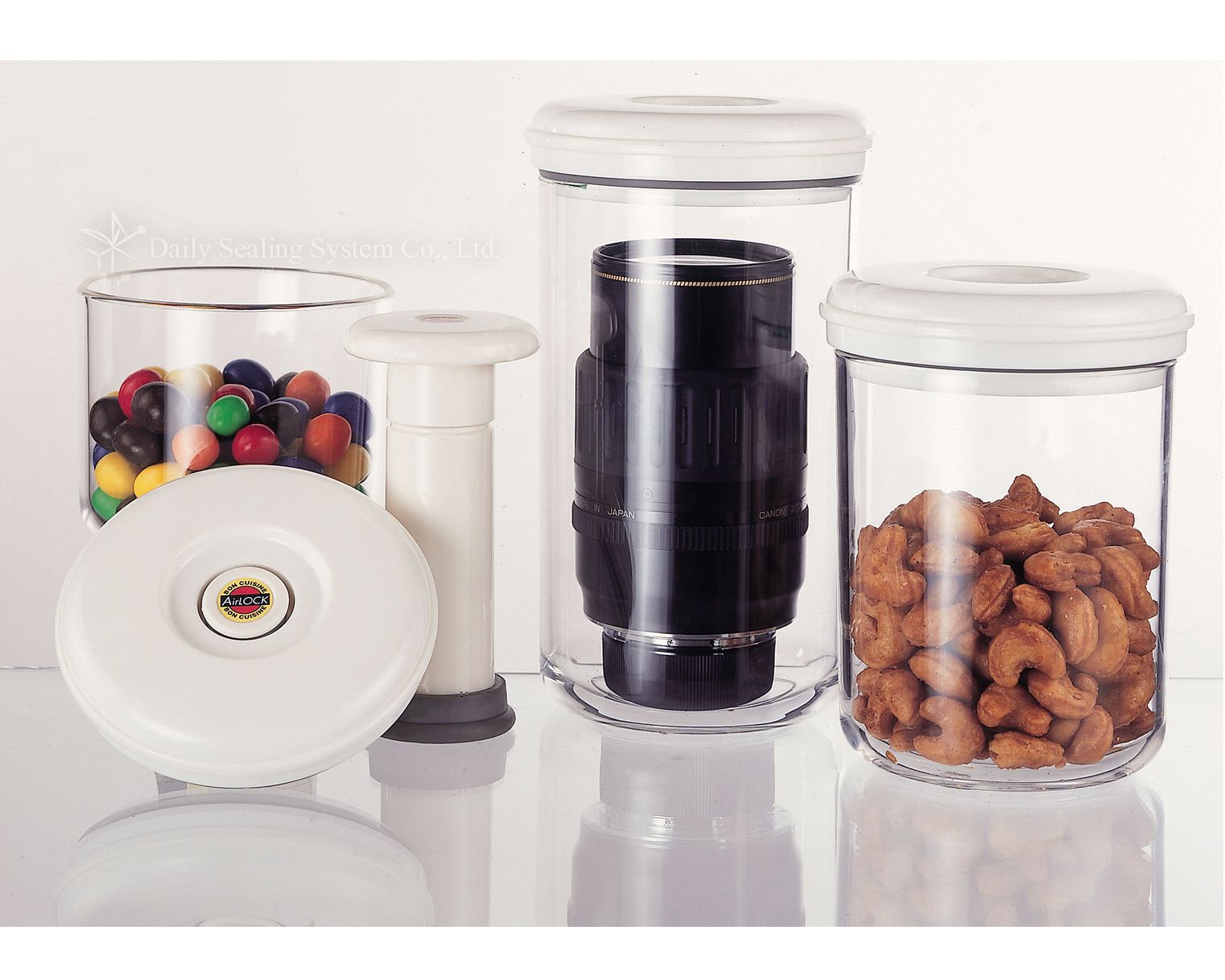
• Contents:Each of 500ml, 750ml, 1000ml canister and 1 manual vacuum pump.
• Material:lid cover: ABS, transparent body: PS.
• Available for:
(1) All kinds of food: can keep fresh and prevent food from humidity and pests, such as tea leaves, flour,coffee powder, cookie, dried food of nuts, pill, etc.
(2) All kind of electronic goods: extend its life and reduce damage of goods due to moisture, such as cameras,battery or antique…
• How to use:
(1) Close the lid, and then put the manual pump on the lid center, and draw 5~6 times, start to operate.
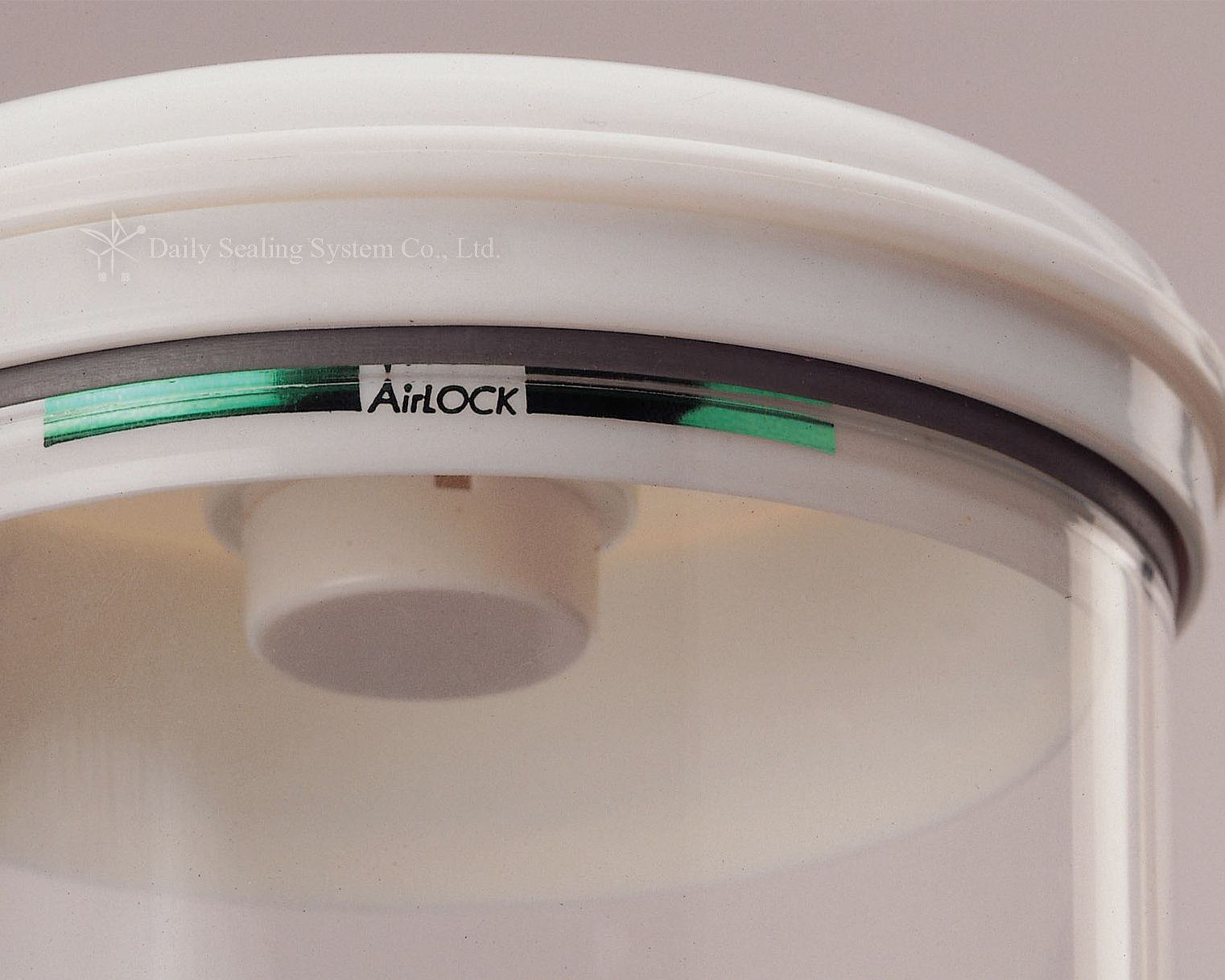
(2) When exhaust completely, the canister mouth will show up green line of “AirLock”.
(3) Press the top small button edge to open the lid finally.
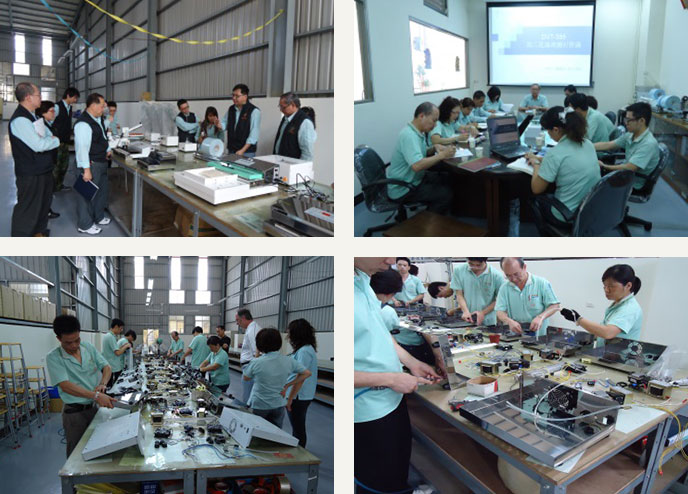
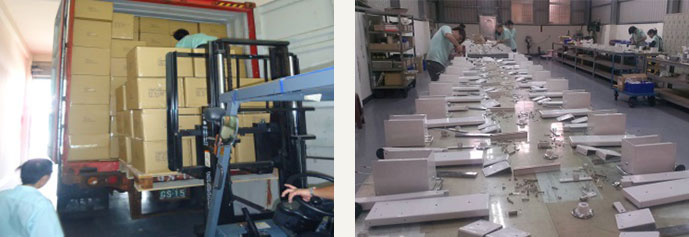
Motor, Transformers, PCB and vacuum bags are made in Taiwan.
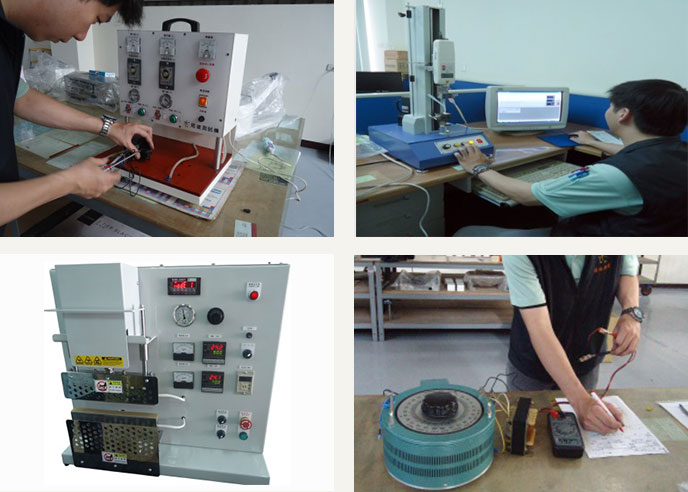
Strict quality control
100% product inspection: The inspection is included functions and
appearance of sealing machines.
Tensile strength test to ensure the sealing line tensile strength
value reaches the customer standard.
Electric leakage test: Puncture and insulation test.
Our production and inspection are all based on ISO 9001.
Professional packaging and sealing machine factory
Produce many kinds sealing machines and ODM/OEM products and provide
custom-made services.
More than 30 year experiences in packaging machines industry.
Sell sealing machines to America, Europe, Latin America and Asia.
85% products in stocks, so we can deliver the products quickly.
The production process is based on SOP to ensure the quality of
sealing machines consistently.
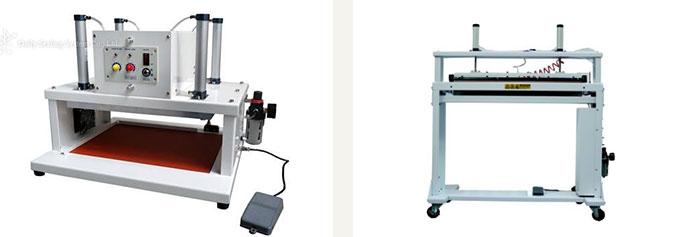
Complete range of specifications of sealing machines
Complete range of specifications of sealing machines.
Many kinds of sealing machines and consumptive materials in stocks,
so customers can do one-stop shopping here.
The customers include Biotechnology companies, Medical equipment
companies, Food industry, Electronics industry, Handmade soap
industry and other industry..
Custom-made sealing machine service
Custom-made sealing machine service
Designs of the special sealing machine for irregular shape sealing
line, such as U-shape sealing line and L-shape sealing line.
Different width of sealing line could be custom-made to meet
customer requirements.
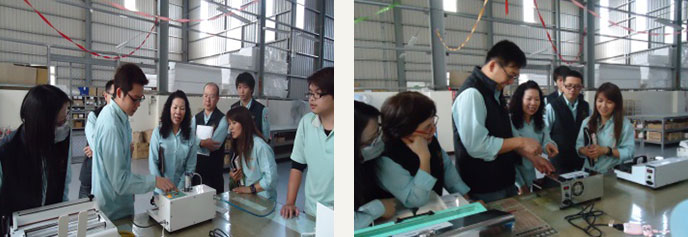
After-sales service of professional sealing machine
Provide the professional service for repair the broken sealing
machine immediately.
The sufficient supply of parts stock, so don’t worry about the parts
replace.
Some parts of sealing machine are used in common specifications, so
it is easy to get the parts for replace.
In recent years, vacuum packaging has become very popular. Vacuum packaging keeps damp proof, extended shelf life, and reduced storage space. There are various types of vacuum sealing machines available on the market. How to find a suitable vacuum sealer
for your product? The following are specially divided into three categories for the vacuum sealers sold on the market (Chamber Vacuum Sealer, Non-nozzle Vacuum Sealer, and Nozzle Vacuum Sealer) to introduce advantages and disadvantages. There are other places
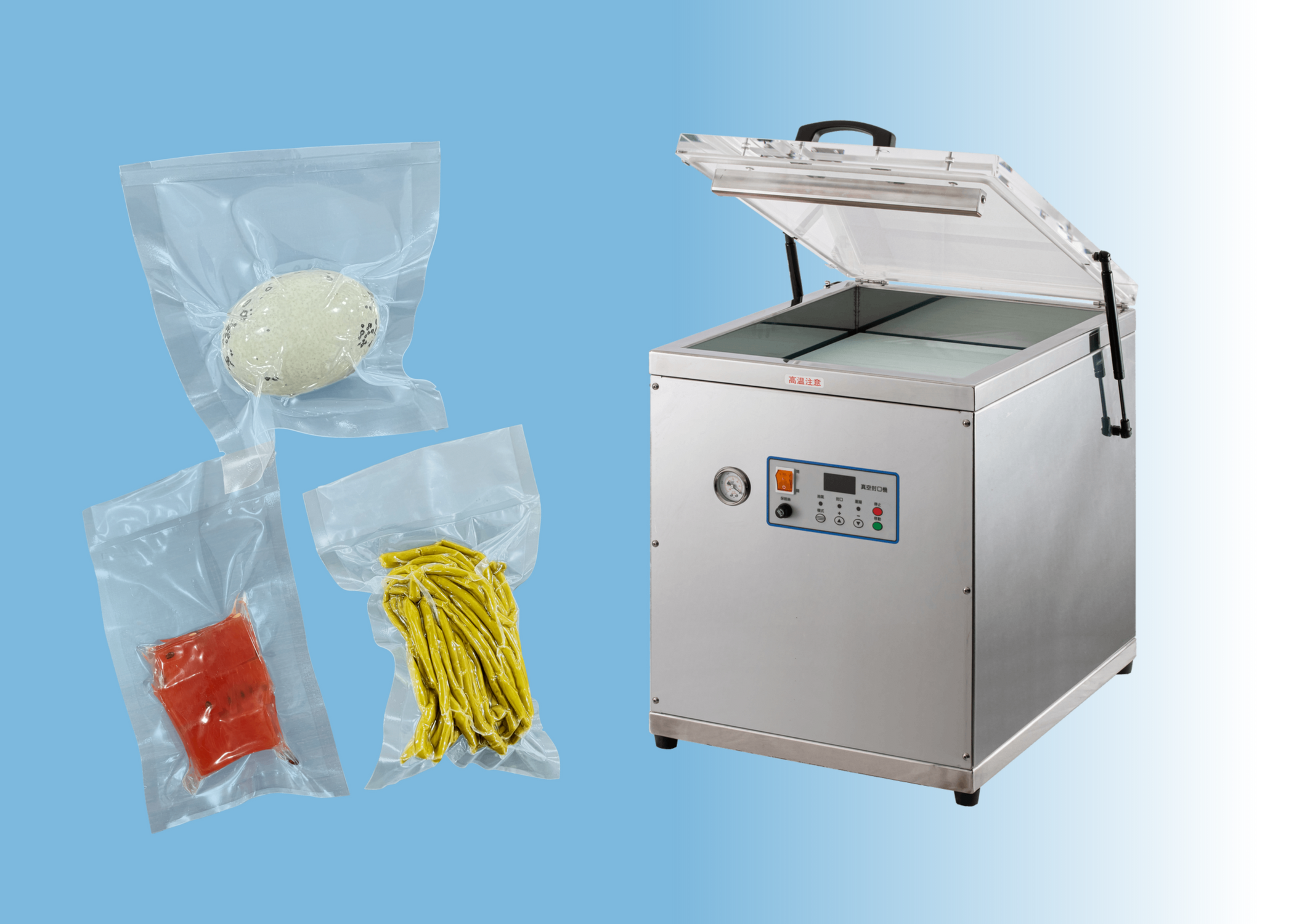
to pay attention to when buying, hope to help everyone buy a suitable vacuum sealer, and enhance the quality of product. ※Chamber Vacuum Sealer This is the most familiar and most commonly seen vacuum sealer. As the name suggests, it looks like a box. Therefore,
large size and heavy weight are the biggest drawbacks of this vacuum sealer, but the vacuum degree is the best compared to the other two types of vacuum sealers. We also call this vacuum sealer an internal vacuum sealer. Because the items which you want to
vacuum have to be put into the vacuum chamber in the vacuum sealer, and can be vacuum packaged. Since the vacuum item needs to be put into the vacuum chamber, the product will be limited by the size of the vacuum chamber. If the product is larger, the vacuum
chamber must be larger. As the size of the vacuum sealer increases, its price also tends to increase. Therefore, when purchasing, it needs to consider whether the internal size of the vacuum chamber is suitable for your needs. The chamber vacuum sealer is
further divided into oil-less and oil-type vacuum sealer due to the different types of vacuum pumps installed inside the machine. The vacuum capability of oil-less type vacuum sealers is slightly lower than that of oil-type vacuum sealers. Oil-less type vacuum
sealer is suitable for dry products, such as tea, dried fruit, rice, and electronic parts. The price of this vacuum sealer is lower than that of the oil-type vacuum sealer, but the vacuum capability is sufficient for dry vacuum packaging. Oil-type vacuum sealer
is suitable for both dry and moist products. If there is liquid in the product, it's recommended to choose an oil-type vacuum sealer. Suitable for packing products: meat, seafood, liquid, and powder. The Oil-type vacuum pumps installed in the Oil-type vacuum
sealers on the market have different vacuum capabilities. If you need vacuum packaging for seafood or meat products, it's recommended to choose an Oil-type vacuum sealer with better vacuum capability. If the product itself is soft, even after being vacuumed,
it will still be soft to the touch, and will not be as hard as dry products after being vacuumed. The price of Oil-type vacuum sealers is higher than that of oil-less-type vacuum sealers, and the higher the required vacuum capability, the higher the price.
Also, it should be noted, Oil-type vacuum pump needs to add vacuum oil, so when using an Oil-type vacuum sealer, it's a must to regularly check the amount of vacuum oil and the clarity of the vacuum oil. If the oil level is below the standard, vacuum oil needs
to be added; if the vacuum oil is cloudy, the old oil must be drained before adding new vacuum oil. The more often the vacuum sealer is used; the frequency of adding and draining oil is also higher. When the vacuum degree drops, you can first check whether
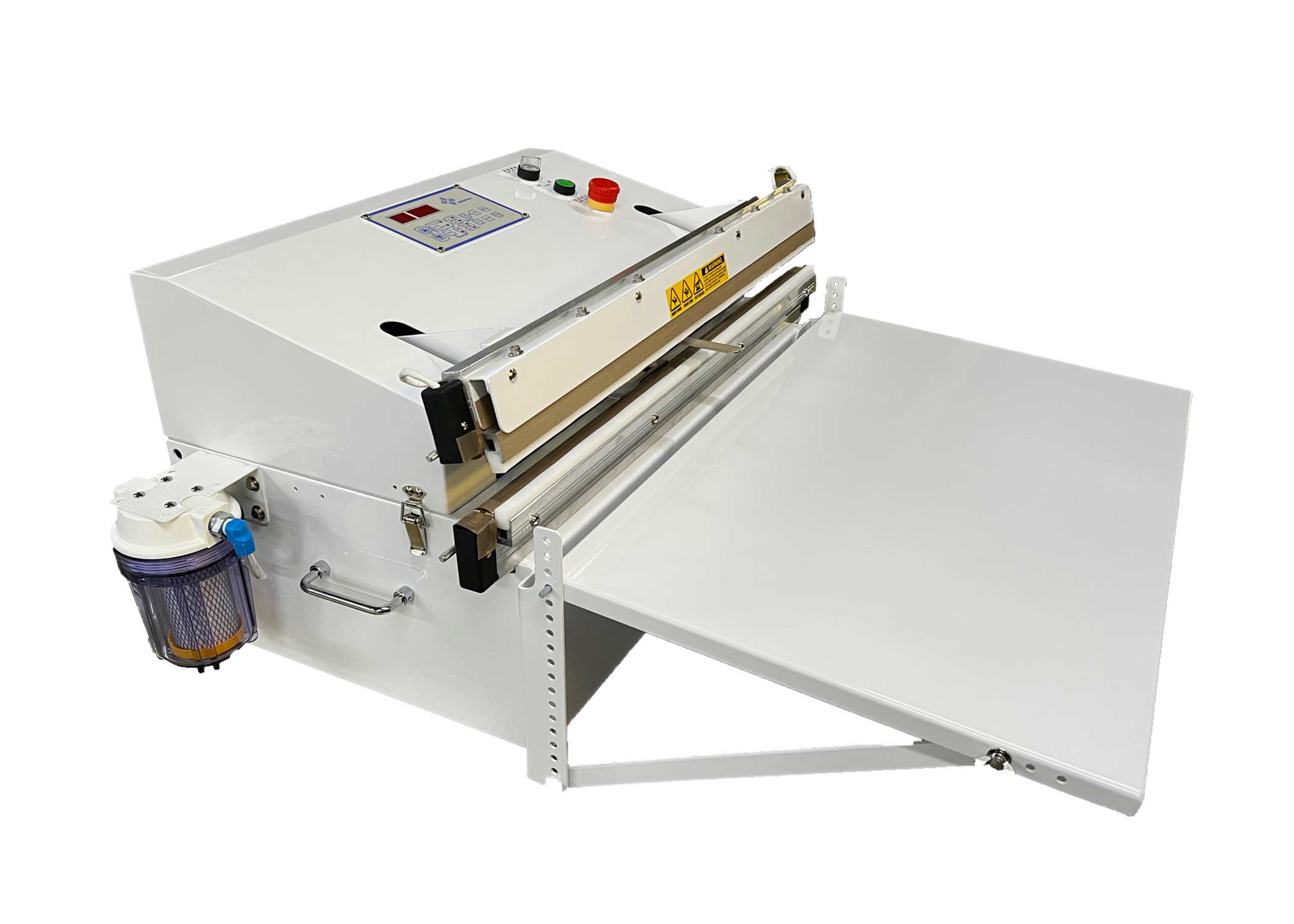
it is due to the vacuum oil. Some oil-type vacuum sealers will also be equipped with oil mist catchers, to capture the oil mist generated during the operation of the oil-type vacuum pump. Smoke generation was found during the operation of the vacuum sealer,
oil mist is likely generated when the oil vacuum pump is running, which is a normal phenomenon. The installation of an oil mist catcher is to reduce the situation of oil mist drifting. The oil mist catcher is a consumable, and the frequency of use will affect
its life. When purchasing a vacuum sealer, factors to consider include price, the suitable types of vacuum bags, vacuum efficiency, the size and type of products to be sealed, and the operating method. No matter what kind of product you want to vacuum, it's
recommended to bring the product to the site for testing before purchasing, test the vacuum effect and understand how to operate it, this will allow you to choose the most suitable vacuum sealer for your needs.
What is a Vacuum Sealer? A vacuum sealer is a device that vacuum seals by removing air from the packaging bag, primarily used for packaging food, pharmaceuticals, chemicals, and electronic products to extend their shelf life and maintain their freshness
and quality. Vacuum sealers create an oxygen-free packaging environment, effectively slowing down the oxidation, mold growth, or bacterial proliferation of products. During the vacuum sealing process, the vacuum sealer first places the product into a specially
made vacuum bag, then the machine removes the air from the bag, and finally, it heat-seals the bag opening to ensure that no air can re-enter. This method of vacuum-sealed packaging not only extends the shelf life of food but is also suitable for non-food
products that need to be stored in a sterile or specific gas environment. Features of Vacuum Sealing: - Extended Shelf Life: By creating a vacuum oxygen-free environment, vacuum sealers help extend the product's shelf life. - Maintains Freshness and Quality:
Beyond extending shelf life, vacuum packaging also maintains the freshness and taste of food. - Multifunctional Application: Suitable not only for food but also for pharmaceuticals, chemicals, and electronic products that need to be stored in a sterile or
specific gas environment. - Easy to Operate: Modern vacuum sealers are designed with user-friendliness in mind, offering simple and convenient operation. What is a Vacuum Sealer?
Dear Sirs, In accordance with government guidelines on Lunar New Year Festival, Daily Sealing will be closed from January 20 to January 29, 2023 for a vacation break. We are very grateful for your patronage and collaboration in the past year, and would
like to take this wonderful opportunity to wish you Happy New Year! Yours truly, Daily Sealing System Co., Ltd.
We use cookies to provide a better experience. By proceeding, you agree to our PRIVACY POLICY, including the use of cookies and other tracking technologies.ACCEPT